September brought new options for breast, lung, kidney, bile duct, skin and neuroendocrine cancers, plus a brain tumor scan and easier lung cancer treatment.
Adding the personalized mRNA therapy intismeran autogene to Keytruda cut melanoma recurrence and spread risk after surgery, a Phase 3 trial found.
A Phase 3 trial found that adding the individualized mRNA therapy intismeran autogene to Keytruda reduced the risk of recurrence and distant spread in patients with resected melanoma, compared with Keytruda alone, Merck and Moderna announced.
A personalized mRNA cancer treatment, given alongside the immunotherapy Keytruda, reduced the risk of melanoma recurrence after surgery compared with Keytruda alone, according to results from a Phase 3 clinical trial announced Aug. 19 by Merck and Moderna.
The trial, called INTerpath-001, tested intismeran autogene, an individualized neoantigen therapy also known as V940 or mRNA-4157, in patients with completely resected stage 2B to 4 melanoma who had not yet received systemic treatment. The study met its main goal, recurrence-free survival, and a key secondary goal, distant metastasis-free survival, with statistically significant and clinically meaningful improvements over Keytruda alone, the companies said.
Merck and Moderna called it the first positive Phase 3 result for an individualized neoantigen therapy and the first Phase 3 study to show a clinically meaningful benefit over Keytruda alone as adjuvant treatment — meaning treatment given after surgery — in melanoma.
"Today's results represent a landmark moment for adjuvant melanoma treatment," Georgina Long, the trial's principal investigator and a researcher at Melanoma Institute Australia, said in a statement. "This is the first Phase 3 study to show that intismeran, a treatment designed based on the unique mutational 'fingerprint' of a patient's own tumor, given in combination with pembrolizumab can reduce the risk of recurrence or death in patients with completely resected stage IIB-IV melanoma compared to Keytruda alone."
Dean Li, president of Merck Research Laboratories, said the findings "reinforce the promise of a more personalized approach to cancer treatment." Moderna CEO Stéphane Bancel called the results "a pivotal moment for the field of cancer research," adding that a treatment designed for an individual patient's cancer is now "turning that vision into a reality."
Melanoma is one of the deadliest skin cancers, with more than 330,000 new cases diagnosed worldwide in 2022. The U.S. is expected to see about 112,000 new cases and more than 8,500 deaths from melanoma in 2026. Even after successful surgery, some patients remain at risk of recurrence, particularly within the first two years, and recurrences are more often distant than local.
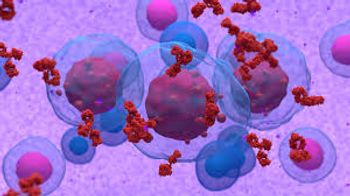
Intismeran autogene is manufactured individually for each patient. Researchers sequence a sample of the patient's tumor to identify mutations unique to their cancer, then create a synthetic mRNA that codes for up to 34 of those tumor markers, known as neoantigens. The goal is to train the immune system to recognize and attack cancer cells carrying those same mutations, while Keytruda helps the immune system target the cancer more broadly.
Keytruda is already approved as adjuvant therapy for some patients with resected stage 2B, 2C or 3 melanoma, based on the earlier KEYNOTE-054 and KEYNOTE-716 trials. If approved, intismeran autogene combined with Keytruda could offer patients an additional, more personalized option for lowering recurrence risk after surgery.
The Phase 3 findings follow earlier Phase 2b data from the KEYNOTE-942 trial, presented at the 2026 ASCO Annual Meeting, in which five-year follow-up results showed the combination cut the risk of recurrence or death by 49% and the risk of distant metastasis or death by 59%, compared with Keytruda alone.
The safety profile of the combination in INTerpath-001 was consistent with previous studies, and no new safety signals were identified, according to Merck and Moderna. Keytruda's known side effects include fatigue, diarrhea, rash and nausea, along with less common but more serious immune-related reactions that can affect the lungs, colon, liver and hormone-producing glands. Patients on these treatments are typically monitored closely for such reactions.
INTerpath-001 enrolled 1,137 patients, randomly assigned 2-to-1 to receive intismeran autogene plus Keytruda or Keytruda alone. Patients received intismeran autogene at 1 milligram every three weeks for up to nine doses, plus Keytruda at 400 milligrams every six weeks for up to nine cycles, for about a year unless the cancer returned or side effects became too severe.
At a planned interim analysis, the combination outperformed Keytruda alone on both recurrence-free and distant metastasis-free survival. The trial will continue to track overall survival, quality of life and long-term safety.
Full results have not yet been presented at a medical meeting or published in a peer-reviewed journal; Merck and Moderna said the data will be presented at an upcoming international meeting. The companies also plan to engage with regulators on potential approval submissions.
Intismeran autogene is being studied in other cancers as part of a broader program of nine Phase 2 and Phase 3 trials spanning non-small cell lung, bladder, kidney, pancreatic and gastric cancers. Patients considering their options after melanoma surgery are encouraged to talk with their care team about clinical trials that may be available to them.
For more news on cancer updates, research and education,