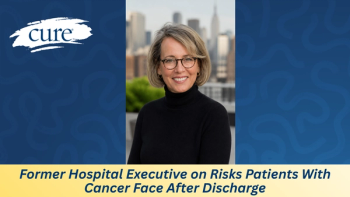
After 17 and a half years with metastatic primary peritoneal cancer, a former hospital executive explains how an AI health agent helped her after discharge.
A long-term metastatic ovarian cancer survivor explains how a trifecta of hope, purpose and grace has shaped her life through years of treatment.
For some of us, cancer does not have a finish line: diagnosis, treatment, recovery, cure. I once wanted to believe in that clean process. But instead, the word I heard from my physician was metastatic. I knew, as a health care administrator, that my world would never return to "normal" when treatment ended. I would never feel the freedom of mindless time and unlimited possibilities. Little did I know then how wrong I was.
For me, cancer came with an echo — more treatments, uncertainty, exhaustion and the quiet work of learning to believe in my life again. As I became a long-hauler, now entering my 18th year of ovarian cancer survival, I began to carry an experience others could not always fathom — a repeated rebirth of sorts. Some days, I hardly recognized the individual I had become. Yet somewhere inside that altered life, I began to discover that I was not only surviving. I was growing, loving more and capable of finding new meaning in my life. The three forces that continue to shape me are hope, purpose and grace.
Hope has new meaning for me. It is no longer a promise that everything will turn out as I want. It is quiet, more subtle and more honest. My hope has been born from the successful impact of new drugs and knowledge about my disease. It breathes, "Live," when I am tired of being brave. I used to hear promises such as "scientists are discovering more every day." I'm no longer a skeptic, as those words have been true. In the last 17 years, I have been on at least six different treatments, all with two to four years of success. After the standard first-line chemotherapy treatments, all but one therapy has stemmed from new drugs and understanding of the disease. Treatment has evolved from a one-size-fits-all approach to genetically matched options. These instances may look small from the outside, but to me they are life-altering: cancer has changed my story, but it has not taken away my sense of confidence for the future or my life journey from me.
Initially after diagnosis, I measured my life against the person I was before cancer. I missed that person — the energy, the certainty, the involvement I once took for granted. But purpose has taught me to stop treating my former life as the only life worth wanting. When I retired early, I imagined a blank whiteboard. My job was to fill it with dreams, just as I had 50 years earlier when I started college. I decided to write historical fiction, beginning with my great-grandmother Tilly's story. She was the earliest ancestor whose BRCA1 mutation I could trace. So, I took many classes, found critique groups and learned to write a novel. Seven years later, I am completing my fifth novel in the Gilded City series and speaking about my story at numerous venues. I don't shy away from others who feel fear, sharing my experience, offering hope. I have achieved purpose in presenting an option, never letting the disease win. Cancer has limited what I can do on some days, but it has not erased what I can give. I've evolved from asking, "How do I get back to who I was?" to the braver questions, "Who am I becoming?" and "What else can I do?"
Grace may be the hardest gift for me to accept. I know how to push, endure and tell people I am fine. I am still learning to rest without shame, accept help without feeling like a burden and let a difficult day be a difficult day. Grace tells me I do not have to earn compassion by appearing strong. It lets me grieve the facets of myself and my life that have changed, while staying grateful for what is still here. And I try to remember to offer that same grace to friends, family and clinicians. We all carry burdens, but none of us must carry the full weight alone.
This trifecta didn't come to me on day one. It has slowly crystallized over years of recovery. I've learned that hope, purpose and grace are not separate lessons to master, but tools within us already that we choose to sharpen. Hope helps me believe there will be more treatments and options ahead. Purpose reminds me that my presence matters. Grace reminds me to face each day as I am — not as I was, and not as I think I should be. Together, they embrace the paradoxes of everyday life: courage and fear, gratefulness and grief, loss and possibility.
"In the midst of winter, I found there was, within me, an invincible summer." — Albert Camus
For more news on cancer updates, research and education,