







Two years of postsurgical androgen deprivation therapy resulted in a 10-year metastasis-free survival rate of nearly 80%.
Two years of postsurgical androgen deprivation therapy resulted in a 10-year metastasis-free survival rate of nearly 80%.

I believe I have hereditary cancer, especially after my daughter was approved to receive genetic testing for breast cancer.

Dato-DXd was efficacious in patients with non-small cell lung cancer with brain metastases who have certain gene alterations, a phase 2 study showed.

PolyPEPI1018 may boost the efficacy of Tecentriq in certain patients with colorectal cancer.

Belamaf plus bortezomib and dexamethasone lengthened the time patients with relapsed or refractory myeloma lived before their disease got worse.

Zanidatamab continued to lead to responses and improved overall survival in pretreated HER2-positive biliary tract cancer.
Patients with myelodysplastic syndromes tended to have longer periods of time without needing a red blood cell transfusion when treated with Reblozyl.

After a good friend told me about her recent diagnosis of breast cancer, I started experiencing a type of breast cancer déjà vu.
SurVaxM, which is being studied in gliobastoma, targets a certain protein that is found on the brain cancer cells.

The safety profile of 200 milligrams and 300 milligrams of oral Ongureg were similar in patients with lower- to intermediate-risk MDS.

Enhertu lengthened the time to progression in patients with HR-positive, HER2-low or -ultralow metastatic breast cancer.

Presurgical paclitaxel, Herceptin and Perjeta showed “incredible efficacy” in treatment of HER2-positive breast cancer.

Perioperative chemotherapy with chemotherapy led to improved survival outcomes versus neoadjuvant chemoradiation in resectable esophageal cancer.

Blenrep, Pomalyst and dexamethasone improved progression-free survival compared to Velcade, Pomalyst and dexamethasone in patients with relapsed/refractory myeloma.

Opdivo plus Yervoy in the neoadjuvant setting reduced the risk for recurrence, progression or death, potentially offering patients with stage 3 melanoma a new standard of care.

Tagrisso following chemoradiotherapy improved progression-free survival compared with placebo in stage 3 EGFR-mutated non–small cell lung cancer.

Researchers found that adding retroperitoneal lymphadenectomy to cytoreductive surgery did not improve survival among patients with advanced ovarian cancer.

Researchers found telehealth care to deliver comparable quality-of-life benefits versus in-person visits among patients with advanced non-small cell lung cancer.
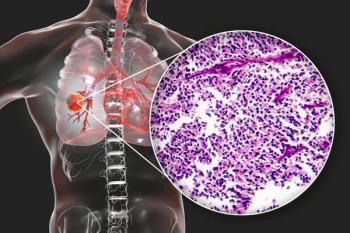
For the first time in decades, a new regimen — consolidation Imfinzi after chemoradiation — improved outcomes in patients with limited-stage small cell lung cancer.

Rybrevant plus Leclaza had promising response and progression-free survival rates in patients with EGFR-mutant non-small cell lung cancer.

Eight-year follow-up showed that Tafinlar plus Mekinist continued to improve outcomes for patients with stage 3 melanoma.

Rybrevant plus Leclaza outperformed Tagrisso regarding progression-free survival in patients with EGFR-mutant non-small cell lung cancer.

An Adcetris-based treatment regimen improved progression-free survival and was more tolerable for patients with classical Hodgkin lymphoma.

When a group of people told me my non-Hodgkin lymphoma cure was a miracle, I realized it was only made possible because of health care professionals.

Lorbrena demonstrated longer progression-free survival and improved time to intracranial progression, compared with Xalkori in ALK-positive non-small cell lung cancer.

From NBA Hall of Famer Bill Walton dying from cancer to an ancient skull showing evidence of early cancer treatments, here’s what’s happening in the oncology space this week.

Scemblix outperformed standard tyrosine kinase inhibitor treatment in patients with Philadelphia chromosome-positive chronic myeloid leukemia.

The priority review is based on findings from a study that found that inavolisib reduced the risk for disease progression or death by 57%.

After I had surgery for my colon cancer, I started taking better care of myself, starting with regaining weight.

The CAR-T cell therapy, Breyanzi, has received FDA approval for relapsed or refractory mantle cell lymphoma.