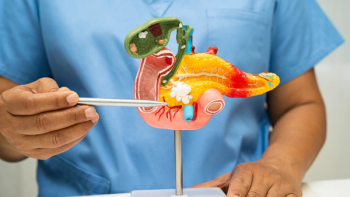
For World NET Cancer Day, CURE answers seven common questions about neuroendocrine tumors, from carcinoid syndrome and Ki-67 to dotatate PET scans and treatment options.
A once-daily oral pill gives patients with symptomatic TGCT another option when surgery could cause more harm than good.
The Food and Drug Administration (FDA) approved pimicotinib (Pimjetmi) on Nov. 10, 2026, for adults with symptomatic tenosynovial giant cell tumor (TGCT) for whom surgery may worsen the ability to use the joint or lead to serious complications.
TGCT is a rare tumor that is usually not cancerous. It grows in the lining of joints, tendon sheaths and bursae, most often in the knee, hip, ankle or hand. Even though it rarely spreads, it can cause pain, swelling and stiffness, and over time it can damage the joint. Surgery is the main treatment, but the tumor often comes back. Repeat operations can leave patients with lasting loss of function. That gap is where drugs like pimicotinib come in.
Pimicotinib is a kinase inhibitor that blocks colony-stimulating factor-1 receptor (CSF-1R), a protein whose signaling drives the growth of the cells that make up the tumor. EMD Serono markets the drug in the United States, and it was developed by Abbisko Therapeutics.
The approval is based on MANEUVER, an international phase 3 trial. Patients were randomly assigned to take either pimicotinib 50 mg or a placebo once a day. To enroll, patients had symptomatic TGCT, surgery would have been risky for them, and at least one tumor measured 2 cm or more.
After 25 weeks, tumors shrank meaningfully (an objective response) in 54% of patients on pimicotinib (34 of 63) and 3% of those on placebo (one of 31). Almost every patient on pimicotinib (58 of 63, or 92.1%) had some tumor shrinkage. One had a complete response, meaning no measurable tumor remained, and 33 had partial responses. Responses often came early: 41.3% of patients taking pimicotinib had responded by week 13.
The benefit showed up in daily life too. The trial met all five key secondary endpoints, with significant improvements in pain, stiffness, range of motion, physical function and tumor volume. With continued follow-up, patients who started on placebo and later switched to pimicotinib had a response rate of 64.5% after a median of 8.5 months.
The most common side effects, each in more than 20% of patients, were itching, rash, facial swelling, swelling around the eyes, fatigue, nausea, headache and swelling of the arms or legs. Common lab changes included higher levels of creatine phosphokinase, lactate dehydrogenase, liver enzymes (AST and ALT), lipase, amylase and cholesterol.
The prescribing information warns about liver damage (hepatotoxicity) and possible harm to an unborn baby. It also warns that serum creatinine can rise without any effect on kidney function. In the trial, 8% of patients on pimicotinib needed a lower dose and 2% stopped treatment because of side effects.
Pimicotinib is taken by mouth at 50 mg once a day, with or without food.
Pimicotinib becomes the third CSF-1R inhibitor approved in the United States for TGCT, after pexidartinib (Turalio) and vimseltinib (Romvimza). China approved pimicotinib in December 2025 for adults with symptomatic TGCT who were not recommended for surgery.
The FDA had given the drug fast track and breakthrough therapy designations. The review ran under Project Orbis, which let the FDA review it alongside regulators in Australia, Canada, Israel, Switzerland and the United Kingdom.
Patients and caregivers can report serious side effects to the FDA’s MedWatch program at 1-800-FDA-1088.
For more news on cancer updates, research and education,