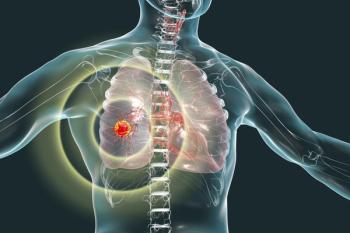
In patients with advanced ROS1-positive lung cancer who had not previously received a ROS1-targeted drug, Jideytro also shrank tumors that had spread to the brain in all 10 evaluable patients.
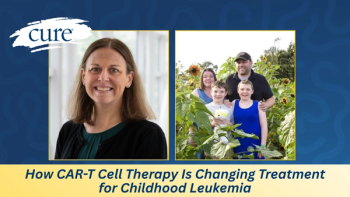
The EVEREST-2 study has reported the first complete response to CAR-T cell therapy in a patient with non-small cell lung cancer.
The EVEREST-2 study has reported the first complete response to CAR-T cell therapy in a patient with non-small cell lung cancer (NSCLC). Athanasia Apostolakos, a 61-year-old attorney from Manhattan, achieved this response after a single infusion of A2B694, a logic-gated CAR-T cell therapy, despite having progression on standard first-line treatment.
Her response was confirmed at day 180 and has been largely sustained, with only an isolated central nervous system relapse that was successfully treated. A2B694 was generally well tolerated, showing no dose-limiting toxicities or serious side effects while demonstrating tumor infiltration.
Athanasia sat down with CURE to share her experience on the EVEREST-2 trial, offering insight into her day-to-day life during and after treatment, the challenges of navigating advanced lung cancer and what this therapy represents for patients facing limited options.
Apostolakos: The study was recommended by Dr. Salman R. Punekar and Dr. Abraham Chachoua, whom I trusted completely. I discussed the study with Dr. Punekar, and all pros and risks associated with the study and decided to proceed with the study.
The apheresis and infusion of the T-cells was relatively easy. I was hospitalized for a week for the infusion, which was uneventful.
The moment that Dr. Punekar told me that my scans showed no evidence of disease will forever remain embedded in my mind. It was the culmination of many months of praying and hoping for a positive outcome and seemed somewhat surreal. Once it sank in, however, it was both exhilarating and humbling.
With the exception of some fatigue, my recovery process was relatively uneventful as far as the CAR-T cell therapy. I was able to go back to my normal daily routine soon after the treatment.
My life has changed with newfound strength and hope. I do not take anything for granted anymore and I appreciate every moment of being alive. The outcome of this trial has also changed me spiritually with renewed faith in God and the power of prayer. I am now certain that with God’s grace, anything is possible, even a cure for cancer.
Do the trials! I was very skeptical in the beginning and very scarred. I did not know what to expect and no matter how well informed I was about the trial the risks were very dominant in my mind. I am forever grateful to Dr. Punekar, Dr. Chachoua and their teams for the effort they put into explaining the process to me and helping me with this decision. Dr. Punekar will always be my “life saver” and his care and guidance will always be the greatest gift to me.
I would tell anyone facing a similar diagnosis to trust in God and He will give you options.
Transcript has been edited for clarity and conciseness.
For more news on cancer updates, research and education, don’t forget to