Two sisters discover they share a BRCA2 mutation, but choose different paths to manage their breast cancer risk and navigate life as previvors.
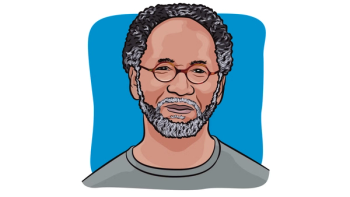
Through personal stories and a research study on group drumming, Chester Freeman explores the reality of "chemo brain" and the power of finding rhythm in recovery.
Have you ever seen the television commercial in which the man drives his car into a closed garage door? I used to think that was hilarious — until something similar happened to me. One morning after chemotherapy, I was so anxious about picking up a new medication from the pharmacy that I got into my car and drove straight into my closed garage door. The door bent and wouldn't budge, trapping me inside my own garage. It was awful. Fortunately, I had my cell phone and was able to call a local garage door company to lift the door, so I could escape. This is chemo brain — that fog where I simply don't think clearly or remember basic things like pushing the garage door opener button on the wall.
I could share many instances, but I'll limit myself to two more examples.
Once, while ordering a gift basket online for a friend who had been so kind to me, I thought I was ordering from Harry and David Gift Baskets. When I received my invoice, however, it was from Gourmet Gift Baskets. I was confused. I’d been so preoccupied that I didn't notice there was another company with a similar name. Fortunately, the basket turned out beautifully, and my friends loved it. I was so thankful.
My third example involves cleaning up the kitchen after dinner. Most of us have little energy after a day of chemotherapy infusions, and my treatment lasted six hours. After dinner one evening, I noticed I was dropping cups and glasses. I wasn't doing it intentionally — it just seemed that the energy in my hands was simply gone. It got to the point where I was breaking at least one glass or cup every week. It really frightened me. Finally, I realized what was happening: I was exhausted and not thinking clearly about what I was doing.
I share these experiences as an introduction to a research study I participated in. This is how the administrators described it:
"The purpose of our study, Interactive Group Drumming and Chemo Brain, was to evaluate the efficacy of interactive group drumming on cognitive function and well-being for people who have received chemotherapy cancer treatment in the past five years. Participants were asked to participate, as they were able, in four consecutive weekly drumming groups occurring at the same time each week, led by a professional HealthRhythms facilitator and a board-certified music therapist.
This study was conducted by the Eastman Performing Arts Medicine Center in Rochester, New York. I was an ideal candidate because I’d been in chemotherapy in the prior year and was actively receiving chemotherapy infusions at the time. The weekly sessions were scheduled to last four weeks, though I was only able to attend three. My blood work deteriorated so badly that I had to be hospitalized. The chemotherapy treatments had stopped working, and my oncologist recommended surgery to remove my spleen. I wasn't happy about this, but I agreed. The surgery was successful, though I suffered from several post-surgical complications that took more than a month to resolve. Now, I’m in the process of recovering.
Despite everything, I want to tell you about those drumming sessions. They were held at the University of Rochester Wilmot Cancer Center, specifically in the building known as the Pluta Cancer Center of Integrative Oncology and Wellness. As I was walking into the building, I have to admit I started laughing when I saw two huge penguins in doctor and nurse uniforms. I knew immediately – this would be a special place.
I always like to arrive early when going somewhere new. When I walked into the waiting room, there was another woman sitting in a chair. We greeted each other, and I asked if she was there for the research study. She said she was and then added that she always likes to arrive early when going to a new place. I told her I did too, and we both laughed! As others arrived, we all began talking, and it seemed as if we all hit it off as friends. Within minutes, we formed the perfect study group. We were all laughing and sharing stories about ourselves. When the facilitator arrived, she was amazed at the camaraderie we shared. The room was now complete with ten people sitting in a big circle.
I was thrilled about the drumming aspect of the study because several years ago I had taken an African Drumming Workshop at the Omega Institute for Holistic Studies in Rhinebeck, New York. I learned a great deal in that workshop and loved being in a drumming circle, so I was filled with anticipation and enthusiasm.
Our facilitator asked us to introduce ourselves and led some exercises to help us get comfortable. She demonstrated different drum beats and asked us to follow her. Then she gave us the freedom to create our own rhythms while trying to maintain harmony in the circle. As time went on, the beats became more complex. It was amazing — everyone took to it like ducks to water. However, I noticed one woman in our circle who looked really exhausted. I knew that look on her face because I had been there. I thought to myself, she must have just come from a chemotherapy session. She was the quietest in the group, and I felt her pain.
Our chairs were arranged in a circle with beautiful red and black drums of various sizes. We all got to choose which one we liked. The drums were made by a company called Remo, known for their synthetic drum heads that give drummers a wider range of tones. We all loved the drums because of their sound and shape. At the beginning and end of each session, we filled out questionnaires. I think we all agreed that we felt uplifted after our first drumming experience. We all created our own drum beat, our own style, and formed a drumming circle that brought us together in unity.
This piece reflects the author’s personal experience and perspective. For medical advice, please consult your health care provider.
For more news on cancer updates, research and education,