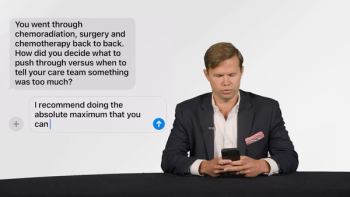
In the latest installment of CURE's "Text a Survivor" series, Brad Moore answers some of the most common questions people have about living with and beyond a colorectal cancer diagnosis.
Former NFL player and advocate Chris Draft urges patients with cancer to recognize small actions, learn terms and stay engaged to rebuild confidence after diagnosis.
During an interview with CURE, Chris Draft, founder of Team Draft, discussed how patients with cancer can begin to feel more in control and even step into advocacy after receiving a diagnosis.
Draft said the first step is recognizing that seeking medical care already shows action. Going to the doctor, reporting symptoms and following through with tests or appointments are meaningful ways patients are actively participating in their health. While the disease itself may not be controllable, he emphasized that patients can control how they respond and engage with their care. He also encouraged patients to learn the language of cancer, such as staging and what terms like metastatic mean, noting that feeling overwhelmed often reflects learning something new. Giving yourself credit for each step, Draft said, is part of rebuilding confidence and agency.
Draft played 12 seasons in the NFL before becoming a national health advocate. He founded Team Draft after his wife died of lung cancer to raise awareness and support patients and families.
For the people reading this who feel powerless after a diagnosis, what is the first step to regaining their agency and possibly even becoming an advocate themselves?
Great question. I think the first thing is to acknowledge that if someone got a diagnosis, it meant they actually went to the hospital, right? They went to the doctor’s office. And so that means they already did something. So, the idea that it’s out of your control? Well, there are things in your control. I mean, the cancer is cancer, but what you can do about it starts with knowing your body. Like my wife — she had a little shortness of breath and called up a primary care doctor, went in, the primary care doctor set up a biopsy and he followed up with those things.
So I think we understand that follow-through has always been an issue in terms of health care. So anybody who is following through, they are doing work right now. The outcome is going to be dependent on your makeup and how you respond to treatment. But I just want to say, make sure you give yourself credit for that.
Then also realize that the information you’re learning — like Heather was talking about stage 4 lung cancer — for most people, it’s like, oh my goodness. But even before that, do people really know staging? I’ve said this a number of times: if you say stage 1 or stage 4, a lot of people don’t even know which one’s worse, right? Because if you’re not in the cancer space, you don’t really know that. So when someone says stage 4 lung cancer or metastatic, again, for a lot of regular people, it’s like, what does that really mean? Did it spread?
So understanding the terms and really just getting a sense of what’s actually happening — give yourself credit for learning something new, because there’s a lot that’s new. When it feels like you’re overwhelmed, you’re learning. Don’t expect yourself to know it right away, but it’s important that you do learn.
Transcript has been edited for clarity and conciseness.
For more news on cancer updates, research and education, don’t forget to