
News|Articles|February 10, 2026
From Missed Signs to Second Chances After a Liver Cancer Diagnosis
Author(s)Ryan Scott
Fact checked by: Spencer Feldman
Listen
0:00 / 0:00
Key Takeaways
- Prolonged diagnostic latency can follow vague fatigue, back pain, and breathing issues, reinforcing the need for persistent self-advocacy when early testing is nondiagnostic.
- MASLD-related HCC risk may be amplified by obesity, alcohol intake, and diet, even in physically active patients who assume exercise offsets metabolic and hepatotoxic exposures.
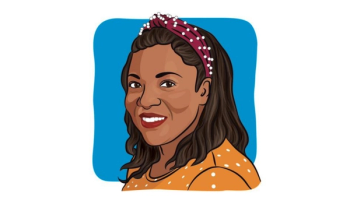
Charles Walker joins CURE’s Gina Mauro to share his long and road to a liver cancer diagnosis and the importance of being your own medical advocate.
Advertisement
Charles Walker joins CURE’s Gina Mauro to share his long and often frustrating road to a liver cancer diagnosis, the overlooked risks of metabolic dysfunction-associated steatotic liver disease (MASLD), and the critical importance of being your own medical advocate.
He also reflects on the physical and emotional toll of treatment, the role of faith and family in sustaining his fight, and how his experience reshaped his approach to health, wellness, and life after cancer.
Walker is a liver cancer survivor and Mauro is a vice president of Content at MJH Life Sciences.
Mauro: Hello everyone, and welcome to CURE. I'm Gina Mauro. Today, we are sharing a story that is equal parts a medical cautionary tale and a profound testament to the power of family. Since 1980, liver cancer death rates in the US have nearly doubled; yet, for many patients, the journey to a diagnosis is paved with confusion and missed signals.
In May 2023, Charles Walker, a father of three and a lifelong athlete, began experiencing fatigue and back pain. Like many, he assumed his active lifestyle shielded him from serious illness. It took months of inconclusive tests before a routine pulmonology visit led to a shocking discovery: Charles had hepatocellular carcinoma, or HCC, triggered by years of undiagnosed fatty liver disease.
He was in a fight for his life, fueled by the music his daughter sent him and a bet from his youngest son that he wouldn't give up. But even after the cancer was eradicated, Charles faced a new hurdle. His MELD score wasn't high enough to prioritize him on the deceased donor list, despite his life hanging in the balance. That is when his son Kyle stepped in. In an incredible act of courage, Kyle became his father's living donor on January 21, 2025, giving Charles not just a portion of his liver, but a second chance at life.
Now, Charles is turning his gratitude into action. Recently named the American Liver Foundation's 2026 National Adult Liver Champion, he is working to raise awareness for the 9,300 Americans still waiting for a transplant and the ALF's New Living Donor Network.
Joining us today to share the lessons of his journey is Charles Walker. Charles, how are you today?
Walker: Good. Thank you, Gina.
Mauro: Thank you so much for being here with us. We're really excited to hear you talk about your journey, and I would really love to start by talking about the road it took you to get your diagnosis. It was a long one. There were visits to chiropractors, a pain specialist, and a pulmonologist for symptoms like back pain and breathing issues.
So, for patients who are currently feeling unheard by the medical system, what advice do you have for advocating for oneself when initial tests don't provide answers?
Walker: Well, I would say be persistent, number one. I could tell right away that things were not normal. It wasn't just something that was going to go away in a few days, and I didn't get the relief that I needed right away. You just have to keep exploring other options and trying to figure out what the problem is. Just be your own advocate. You hear that all the time, but I guess that's probably the short answer.
Mauro: No, it's an important one. I also want to make sure we speak about metabolic dysfunction-associated steatotic liver disease, otherwise known as MASLD. This is really important to know about. You had mentioned that you believed routine exercise allowed you to eat and drink whatever you wanted, which is a common misconception.
Looking back, what do you wish you had known earlier about MASLD, and how has your perspective on wellness changed since your diagnosis?
Walker: Yeah, I guess I was just living for the moment. I tried to eat well, but as far as other things, alcohol consumption was one of the big factors that contributed to my disease. I feel there were certain things in my diet that also contributed, and I was obese; those are things that will trigger MASLD. Looking back, yeah, I wish I had been more educated on the long-term effects these habits would have on my life.
Mauro: Thinking about this type of condition, are there go-tos now from a nutritional standpoint that you make sure you're eating or drinking, or things that you definitely stay away from?
Walker: I haven't touched a drop of alcohol since my diagnosis. I have friends who are still friends, but they drink, and I try to warn them of the potential danger they're causing themselves. I kind of feel that until you are faced with this type of thing, or you're in a situation where you have no other choice but to quit, some people aren't going to stop. As far as diet goes, I was never a big vegetable or fruit eater, but now I eat vegetables and fruits daily. I learned to like them; so much of it is mental, and you just have to adjust your thinking.
Mauro: Well said, and very true. I want to speak on the emotional toll of immunotherapy and radiation, which can be intense. You highlighted how music from your daughter and a certain bet from your son, Derek, really kept you going.
When you were in some of your darkest moments, how did you consciously shift your mindset from disbelief to fight?
Walker: I don't know if it's a choice. I think it's a fight-or-flight type of thing where something just takes over. That's kind of what happened. I realized this is something I've never faced before in my life, and I have to deal with it. It’s not going away; it’s not the common cold. It just clicked, basically. I was in that fight mode, and I was going to do everything I could to combat it and follow whatever the doctors told me to do. As you mentioned, my children were very supportive, my wife was incredible, and my faith in God was renewed.
I always believed in God, but I had gotten away from my religion a little bit. I can't emphasize enough how much it meant to me to know that God was going to be there for me; that was really the most important thing.
Mauro: I'm really glad you said that. It sounds like you have a very supportive village that really rallied around you. Could you dive more into that?
Walker: I've always been raised to believe family is the number one most important thing in your life, and I still believe that. The support I got from them was just incredible. My youngest son (not the one who was the donor) had just moved out to live on his own, and he moved back in to help out, which benefited us both, let's be honest. My oldest sister came and stayed with me for a month. She’s extremely bright and was a good sounding board for my wife to do research and ask questions. She came to a lot of my appointments with me early on, so she was an incredible resource.
All my sisters — I have five, no brothers — have been great. They all called me; my nieces, my nephews, they were all there for me. They were all in my corner: friends, everybody. Once you see that people are rallying around you, it gives you a little extra energy to say, 'Hey, I’ve got to fight this, and I’ve got to win.' It was extraordinary.
Mauro: It’s so important; it's a really good, positive boost to help get you there. Thank you for sharing that.
Transcript has been edited for clarity and conciseness.
For more news on cancer updates, research and education, don’t forget to
Advertisement
Related Content
Advertisement



Advertisement
Advertisement
Trending on CURE
1
5 Years of Prostate Cancer Advances: A Timeline of FDA Approvals and What They Mean for Patients
2
5 Years of Lung Cancer Advances: A Timeline of FDA Approvals and What They Mean for Patients
3
At 21 I Was Given 18 Months. This Year I Turned 40.
4
What Cancer Survivorship Means to Me Now, Eight Years Later
5