Libtayo survival data, a rare positive osteosarcoma trial and new ADCs for breast, lung and stomach cancers are among ESMO 2026 abstracts to watch.
New ELCC 2026 data show longer survival, better brain metastases control and more personalized treatment options for patients with lung cancer.
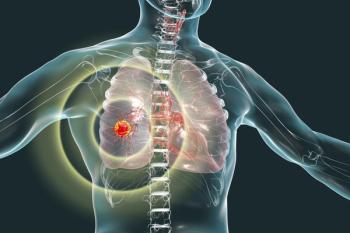
Researchers at the 2026 European Lung Cancer Congress presented several breakthrough highlights that could redefine the standard of care for patients with various forms of lung cancer. These updates offer fresh hope for those who have exhausted traditional options or face high-risk genetic mutations that make their cancer harder to treat. From new immunotherapy combinations to targeted drugs that reach the brain, the findings emphasize a shift toward personalized medicine that treats each patient’s specific cancer markers.
For patients with squamous non-small cell lung cancer (NSCLC) whose cancer has returned after initial immunotherapy, data from stage 1 of the phase 3 PRESERVE-003 trial (NCT05671510) showed that gotistobart (ONC-392) provided a significant survival benefit over the standard chemotherapy drug, docetaxel.
In this study, the objective response rate — the percentage of patients who experienced significant tumor shrinkage — was 20% for those taking gotistobart compared to only 4.8% for those on docetaxel. Furthermore, the overall survival, which tracks the total length of time a patient lives after starting the treatment, was notably longer for the gotistobart group. While patients on chemotherapy lived a median of 9.95 months, the median survival for those on gotistobart has not yet been reached because so many patients are still doing well on the therapy.
“PRESERVE-003 stage 1 data highlight the potential of gotistobart as a chemotherapy-free option for patients with treatment-resistant squamous NSCLC, a population with critical unmet need,” said lead study author Dr. Kai He, during his presentation.
He is a medical oncologist and assistant professor of medicine in the Thoracic Oncology Program at The Ohio State University in Columbus.
This global phase 3 trial is currently enrolling patients for its pivotal second stage. This next part of the research will specifically focus on 414 patients with squamous NSCLC to further confirm these results. For patients, this means a new immunotherapy-based option is on the horizon that may be more effective and provide a more durable response than traditional chemotherapy after initial treatments stop working.
Patients with advanced NSCLC harboring HER2 mutations often face a high risk of the cancer spreading to the brain. New data from the Beamion LUNG-1 study found that Hernexeos (zongertinib) is highly effective at treating both the main tumor and cancer that has reached the central nervous system.
In patients who had not received prior treatment, Hernexeos achieved an objective response rate of 76%. The study also measured progression-free survival, which is the amount of time a patient lives without their cancer growing or spreading. For these patients, that time was a median of 14.4 months.
Crucially for many families, Hernexeos showed strong intracranial activity, meaning it can cross the blood-brain barrier to fight tumors in the brain. In patients with active brain metastases who had not received prior radiation, the response rate in the brain was 59%.
“Zongertinib demonstrated clinically meaningful benefit in patients with advanced HER2-mutant NSCLC, including in patients with active brain metastases, with a manageable safety profile and notably few grade 3 or higher treatment-emergent adverse effects [TEAEs],” noted Dr. John V. Heymach, the chair of Thoracic/Head and Neck Medical Oncology at The University of Texas MD Anderson Cancer Center in Houston.
Dr. Heymach also highlighted the significant gap this fills: “Prior to zongertinib, there was no approved HER2-targeted first-line therapy, a major unmet clinical need”.
The TOP trial presented at the congress focused on a specific group: patients with EGFR-mutant NSCLC who also have a TP53 mutation. This combination is often linked to a more aggressive disease that does not respond as well to standard treatments. Researchers found that adding chemotherapy to the standard drug, Tagrisso (osimertinib), significantly extended the time patients lived without their cancer worsening.
Patients receiving the Tagrisso and chemotherapy combination experienced a median progression-free survival of 34 months. This was more than double the 15.6 months seen in those taking Tagrisso alone. The overall response rate was also higher at 82.9% for the combination versus 71.6% for the single drug.
“These findings provide key evidence to support a molecular risk–guided, individualized treatment strategy for EGFR-mutated advanced NSCLC,” said lead study author Dr. Yunpeng Yang, a member of the Department of Medical Oncology, Sun Yat-sen University Cancer Center, State Key Laboratory of Oncology in South China, Guangdong Provincial Clinical Research Center for Cancer, Collaborative Innovation Center for Cancer Medicine in Guangzhou, China.
Yang noted that the discussion in the medical community is changing: “The central debate has shifted from establishing the efficacy of combination therapy to another question: Which patient population truly needs treatment intensification?”.
While the combination therapy led to more side effects, such as anemia and low blood counts, Dr. Yang explained that the safety results were manageable. “The safety profile in this study was consistent with that reported in the phase 3 FLAURA2 study, with no new safety signals,” he said. He further clarified, “The most common [side effects] in the combination group were hematologic toxicities, and the majority of non-hematologic [side effects] were grade 1 (mild) or 2 (moderate). The most common [side effects] in the monotherapy group were lymphocyte count decrease and diarrhea”.
Finally, researchers shared encouraging results for patients with extensive-stage small cell lung cancer (ES-SCLC), a particularly fast-moving form of the disease. A phase 2 trial combined the immunotherapy serplulimab with a new type of targeted drug called iza-bren (izalontamab brengitecan).
The efficacy was described as "striking" because 88.3% of patients saw their tumors shrink. Every single patient in the analysis experienced some level of tumor shrinkage. The progression-free survival for this combination was 8.2 months, which is a major improvement over the roughly five months typically seen with current standard treatments. Because of these results, a larger phase 3 study is being prepared to further confirm how well this combination works for patients in the first-line setting.
These updates from the congress represent a major step forward in ensuring that the right patient receives the right treatment at the right time. For many patients, these results mean more time with their families and more options for fighting their disease.
For more news on cancer updates, research and education,