After 19 years of survivorship, one cancer survivor reflects on life's changing seasons, managing scan anxiety and finding support beyond treatment.

Colleen Mabasa reflected on the importance of self-advocacy, as well as seeking second opinions and ensuring patients understand all available options.
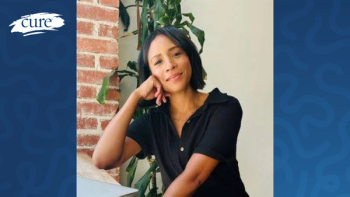
Colleen Mabasa, a patient with multiple myeloma, sat down with CURE for an interview to discuss how she pursued chimeric antigen receptor (CAR)-T cell therapy, navigated insurance and logistical barriers and ultimately achieved no measurable residual disease (MRD).
In the conversation, she reflected on the importance of self-advocacy, as well as seeking second opinions and ensuring patients understand all available treatment options.
Mabasa: Before I even get into that, I have to go back to how I first heard about CAR-T cell therapy. I was participating in a clinical trial at Memorial Sloan Kettering Cancer Center which was introducing quadruplet therapy as induction. When I became active, triplets were standard, so I enrolled in this trial for quadruplets.
At one appointment, a physician came in with a large team. Memorial Sloan Kettering is a teaching hospital, so that is common, but this doctor had an entire entourage taking notes on everything he said. After he left, I asked my clinical nurse, “What is the deal with this guy?” She told me, “He’s a CAR-T guy.” I asked, “What is that?” That was the first time I heard about CAR-T.
From that point on, I kept asking questions. I was fascinated by the idea that my own T cells could be reprogrammed to kill my cancer. It felt like a race against time. I knew CAR-T existed, but it was difficult to access and required multiple prior lines of therapy. I had only had one. It was not yet approved by the U.S. Food and Drug Administration (FDA), so I did not know whether it would ever be available to me.
Then I learned about the Oncologic Drugs Advisory Committee (ODAC). In patient forums, people were saying this was a major event. I watched the entire meeting because they were deciding whether CAR-T would be available for my type of myeloma. I relapse slowly — it is like seeing the iceberg ahead but not knowing when you will hit it. I knew I was relapsing and that I wanted CAR-T. I just did not know whether it would be approved.
During the ODAC meeting, the physician testifying was the same doctor with the entourage. I remember thinking, “I know that guy.” CAR-T was approved in April, and from there, I pushed to make it happen. Getting all the pieces aligned was more complicated than simply wanting the treatment.
When I began induction therapy in 2019, we discussed stem cell transplant and CAR-T. I chose to collect stem cells but did not proceed with transplant. Later, when I became active again, my center arranged another meeting with the transplant team, which also handles CAR-T education. At that time, CAR-T was not yet available, but we reviewed the research and options.
I knew about the meeting in advance, so I prepared questions and asked my husband and son if they had any. When I eventually became eligible, insurance became a major issue. My center was considering dropping my insurance carrier, and thousands of patients might have needed new oncologists. I was afraid of losing access to a specialist.
I sought a second opinion at Mount Sinai. The doctor reviewed my labs and said I had already relapsed and had been eligible since July. This was September. He contacted my oncologist, which moved things forward. I then met with another doctor, who spent extensive time reviewing the process with me and my husband, who would be my primary caregiver. Altogether, I spent approximately four to five hours discussing what CAR-T entailed. That education was invaluable.
I am a glass-half-full person. Even when I was diagnosed and told myeloma is incurable, my response was, “It is incurable now.” I believed I would achieve MRD negativity, but I did not expect it so quickly.
I received CAR-T on Jan. 29, 2025. On Feb. 25, my bone marrow biopsy showed I was MRD negative. It was less than a month. I was still at Sloan when I received the results.
The mental burden that lifted is hard to describe. With myeloma, there is always something in the back of your mind: appointments, labs, planning. For the first time, I could just be a mom. That felt incredible.
I am a licensed professional counselor, and advocacy is part of my career. Still, it is different when you are advocating for yourself. Early on, I hesitated to ask for clarification or seek a second opinion because I did not want to offend my oncologist. Then I asked myself: if my oncologist were in my position, would they get a second opinion? The answer was yes.
That shift removed the guilt. You have value. You matter. Being active in your care is not disrespectful.
In fact, a second opinion confirmed I met relapse criteria when there was disagreement over how my labs were interpreted. Insurance ultimately approved treatment based on that assessment. Differences of opinion occur, even among specialists. It is appropriate to seek clarity.
Clinically, I felt prepared. Logistically, it was overwhelming. Lodging in New York City for several weeks was a financial strain. I also did not realize that prior authorization did not mean one bill. Every appointment generated separate charges. We spent significant time resolving billing errors.
Breaking everything into smaller tasks helped. I made lists of responsibilities (family, finances, work) and addressed them in short daily increments. Accept help and be specific about what you need. Caregivers can participate in many ways, including accessing medical records through patient portals to help generate questions for appointments.
Be active in your care. A treatment center can only offer what is on its menu. There may be clinical trials or therapies elsewhere that your current center does not provide. Informed consent requires knowing all your options.
Transcript has been edited for clarity and conciseness.
For more news on cancer updates, research and education, don’t forget to