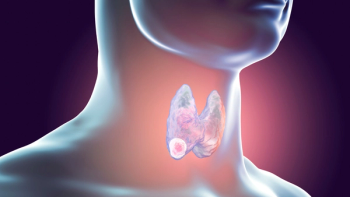
Patients with HPV-associated oropharyngeal cancer who received 23% less radiation reported fewer swallowing, voice and dry mouth problems six months after treatment.
New immunotherapy use before and after surgery improves outcomes, making early symptom recognition and expert care more critical than ever.
The addition of immunotherapy before and after surgery is reshaping treatment for patients with head and neck cancer, according to Dr. Robert I. Haddad, chief of the Division of Head and Neck Oncology at Dana-Farber Cancer Institute and professor of medicine at Harvard Medical School.
Haddad explained that while immunotherapy has long been used in recurrent or metastatic disease, recent phase 3 trials, including KEYNOTE-689, show that using Keytruda before surgery improves outcomes in patients with locally advanced disease. Another study, the NIVOPOST-OP trial, found that adding Opdivo (nivolumab) after surgery with chemotherapy and radiation also improved outcomes. Together, these findings mark a major shift in care over the past year.
He emphasized that treatment remains complex and often affects swallowing, speech and quality of life, making it critical for patients to seek care from an experienced, multidisciplinary team.
During Head and Neck Cancer Awareness Month, Haddad also highlighted the importance of early evaluation. Symptoms such as a persistent neck lump, mouth sore, voice changes or sinus issues should be checked promptly, as early detection can improve outcomes.
Haddad: The biggest change we’ve seen in how we treat head and neck cancer over the past year is the incorporation of immunotherapy into the locally advanced setting. As background, we’ve been using immunotherapy in head and neck cancer for many years for patients with recurrent or metastatic disease, where we know it improves survival. However, for many years, we could not show that moving these agents into the locally advanced setting helped patients.
The KEYNOTE-689 trial, which we presented last year and which subsequently led to FDA approval of Keytruda (pembrolizumab) in head and neck cancer, represents a major change in how we treat these patients. In this trial, we looked at the addition of perioperative immunotherapy, specifically two cycles of Keytruda before surgery, for patients with newly diagnosed head and neck cancer who were planning to undergo surgery as their main treatment. We asked whether adding Keytruda before surgery improves outcomes, and the answer was yes. We saw a significant improvement in event-free survival. That study, published last year in The New England Journal of Medicine, led to approval of Keytruda in this setting.
For patients being treated with surgery today in 2026, we now routinely incorporate perioperative Keytruda before surgery. This applies to patients with stage 3 and stage 4 disease and a CPS of 1 or more.
Another positive trial from last year is the NIVOPOST-OP trial. In that study, the addition of Opdivo after surgery, in combination with chemotherapy and radiation, also improved event-free survival compared with chemoradiotherapy alone. Within the span of 12 months, we’ve seen two positive phase 3 trials, NIVOPOST-OP and KEYNOTE-689, showing that adding immunotherapy in the locally advanced setting helps patients. As of April 2026, only Keytruda is indicated in the United States in the perioperative setting. This is a major shift in treatment that has happened over the past year.
Head and neck cancer treatment is complex. It often involves multiple approaches, including surgery, chemotherapy and radiation. We’ve known for a long time that the experience and expertise of the care team matter a great deal, both for survival and quality of life.
The first thing we advise patients is to seek care from an experienced team that specializes in head and neck cancer. This can make a meaningful difference in outcomes and quality of life. These cancers are difficult to treat, and they affect areas that are essential for daily function, including swallowing, speech and sometimes appearance. Treatment can also involve complex reconstruction, especially when surgery is the first step.
My main advice to any patient with a new diagnosis is to seek an experienced, multidisciplinary team, ideally at an academic center with a strong track record in treating head and neck cancer.
Yes, there is a lot of ongoing research. While immunotherapy is now routinely used in recurrent and metastatic disease, response rates are around 20%, so there is still room for improvement.
Several phase 3 trials are underway to improve outcomes by combining immunotherapy with additional agents. One of the most promising categories is EGFR inhibitors. There are currently three EGFR inhibitors in phase 3 trials in head and neck cancer, and I expect they could have a meaningful impact on treatment over the next three to five years.
There is also ongoing research focused on improving perioperative Keytruda. For example, studies are evaluating whether adding a second or third agent before surgery can increase pathologic response rates. This could potentially allow for less extensive surgery and better quality of life. Overall, there is significant progress happening in both recurrent or metastatic disease and newly diagnosed disease.
Maintaining swallowing function is essential, so we work closely with patients on swallowing exercises during treatment. Patients should also meet regularly with a nutritionist and a speech and language pathologist.
Pain management is also critical. Some patients may require a feeding tube during treatment. This again highlights the importance of an experienced care team.
Head and neck cancer care truly requires a multidisciplinary approach. It involves nutrition, speech and language pathology, physical therapy, pain management, social work and mental health support. Coordinating these services in one place, ideally at a high-volume center, helps patients get through treatment more effectively.
Symptoms can be subtle, and early evaluation is key to better outcomes. One of the most common signs is a lump in the neck. If you notice a lump, it’s important to seek medical care promptly.
Head and neck cancer is no longer limited to people who smoke or drink heavily. Many patients today, especially those with oropharyngeal cancer, have disease related to HPV and may not have traditional risk factors.
There should be a high level of awareness. Any persistent lump, a sore in the mouth that does not heal within two to three weeks, changes in voice or prolonged sinus symptoms should be evaluated. Patients should seek care and ask about imaging such as a CT scan or MRI if symptoms persist. Early detection allows for earlier treatment, which can improve survival and quality of life.
Transcript edited for clarity an conciseness
For more news on cancer updates, research and education,