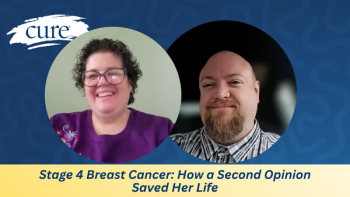
Diagnosed with stage 4 breast cancer weeks after giving birth, Eileen Carter explains why getting a second opinion changed the course of her care.
Lauren Yerkes shares how her breast cancer diagnosis uncovered generations of genetic information for her family.
For many facing a cancer diagnosis, the "why" can be the most elusive piece of the puzzle. When Lauren Yerkes was diagnosed with stage 2b triple-negative breast cancer at just 37 years old, she had no family history to point to. However, her heritage held a hidden clue.
As an individual of Ashkenazi Jewish descent, she learned from her surgeon that her risk for carrying a genetic mutation was significantly higher than the general population. A subsequent blood draw confirmed she carried the BRCA2 mutation, a discovery that shifted her perspective from "patient" to "proactive advocate."
This revelation didn't just impact Yerkes’ treatment —which eventually included a double mastectomy and a preventative hysterectomy — it sparked a chain reaction throughout her family. From her mother to her cousins, her family utilized genetic testing as a roadmap for prevention.
In this interview with CURE, Yerkes shared how she moved from the initial "numbness" of her diagnosis to embracing a "knowledge is power" mindset, and why she believes early screening is the ultimate advantage.
At what point did genetic testing enter your cancer journey?
I was diagnosed in 2022, I was 37 I had no family history, and I was stage 2b triple-negative breast cancer, and my surgeon was the first person to ask me if I had any family members that had it, but also asked if we were ever tested for genetic mutation. And then she was the first one who told me that, because I am of Ashkenazi Jewish descent, that my rate of developing breast cancer was one in 40 for Ashkenazi Jews. And then from there, that spiraled into a blood draw and, I think it was about three weeks later, was when I was told I carried BRCA2. So that gave me, let's say my why, as to why I got breast cancer. I think I was still too young, but then from there, my mom tested, and she tested positive. So she's also a carrier and has had preventative surgeries. And then her mother tested, because my grandfather has passed, and my grandmother tested negative, and then we just assumed it came from my grandfather. And then my mom's two brothers tested, one brother was positive, and now his two daughters are also positive. So that is the genetic mutation story of myself and my family.
When I first learned, I honestly was a little numb because I had just been diagnosed with cancer, and so it was like dealing with that was my priority. But since then, I've actually seen it as a tool, and I think it's really powerful to know. And I tell everybody to do genetic testing whether you're an Ashkenazi Jew or not. I think the benefit of knowing if you have a mutation, whether it's BRCA or any of the other ones, that it is huge for your health and to be proactive and to get early screening. Now I don't think about it as much, because it's like I've done everything I can at this point to prevent it, and I'm screened regularly. So at this point, it's more of just like a tool in my pocket, and it's become more of a “knowledge is power”-type of mindset that I have about it now.
Transcript has been edited for clarity and conciseness.
For more news on cancer updates, research and education,