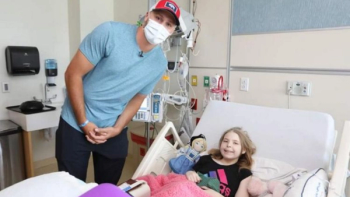
Hannah was 11 when she was diagnosed with acute lymphoblastic leukemia (ALL). Four years, two relapses and a 53-day hospital stay later, she is back in school.
Gratitude didn’t erase my fear, but it gave me something solid to stand on. It became the coping strategy I needed.
When I was told 16 years ago that I had an incurable chronic cancer — small lymphocytic lymphoma (SLL) — I felt devastated. It took time to wrap my head around the diagnosis and process what it truly meant. For the first time, I began to look at life through a different lens — a limited one. In my mind, I was given, if I was lucky, 10 years to live from the time of diagnosis.
There was still so much I wanted to do, yet I began living a restricted life, already assuming I would never experience many of the things I had hoped for. I did not have the positive mental attitude (PMA) that I have today.
Like many patients facing a life-altering diagnosis, I wanted to understand exactly what I was dealing with. I turned to the Internet and began reading everything I could about my condition. That’s when I realized how fortunate I was. I learned about medications being tested and breakthroughs on the horizon — treatments that had the potential to extend my life well beyond the 10 years I had locked into my thinking.
I vividly remember being at a party and discussing my diagnosis with a doctor who was there. I will never forget when he told me that I was more likely to die from something else than from my cancer, especially given the pace of discoveries being made. Between learning about new treatments and hearing those words from a medical professional, I knew I had to reframe my thinking. The framework I was living in wasn’t serving me — it was robbing me of my daily life and preventing me from living fully.
I made a conscious effort to notice moments of gratitude and to approach life with more optimism. Over time, I learned that gratitude isn’t just an emotional response; research suggests it can support emotional coping, ease anxiety, and help patients feel steadier during times of uncertainty. Gratitude didn’t erase my fear, but it gave me something solid to stand on. It became the coping strategy I needed.
I began journaling more, recording moments of gratitude — especially during treatment. This practice reduced my psychological stress and enhanced my spiritual well-being, as I intentionally searched for moments of joy to capture and reflect on later. By focusing on gratitude, I shifted my attention toward the good in my life, not just my diagnosis. Concentrating on the positives helped me adopt a healthier, more hopeful frame of mind.
I also turned to my religion, which — like many faiths — emphasizes gratitude to God. I found myself thanking God for my doctors, for the treatments available at the time, and for those still awaiting approval. Friends told me they were praying for me, my family
prayed for me, and I prayed for myself. That collective faith sustained me in ways I didn’t fully understand at the time.
As I learned more about my particular cancer, I also came to realize that the diagnosis could have been far worse. I could have been told I had a much more aggressive or fatal cancer. That awareness shifted my perspective. The words my doctor spoke could have carried a far more devastating outcome — and that realization deepened my sense of gratitude.
Living with chronic cancer still comes with uncertainty, and gratitude doesn’t eliminate fear or guarantee peace every day. What it has given me, however, is the ability to reclaim joy in the present moment. Gratitude taught me to widen my lens — to see not just what I might lose, but everything I still have. Sixteen years later, I am still here, still living, still finding meaning in moments both big and small. And in choosing gratitude, again and again, I have learned that joy is not something cancer can take away unless I let it.
“Our lives are the sum of what we’ve given our attention to.” — Angela Buchdahl
This piece reflects the author’s personal experience and perspective. For medical advice, please consult your health care provider.
For more news on cancer updates, research and education,