Depending on dose, firmonertinib shrank tumors in 43% to 68% of patients as a first treatment for EGFR PACC-mutant lung cancer in the phase 1b FURTHER trial.
Lung cancer patient and her father, a cancer survivor and caregiver, share how community, hope and self-advocacy helped them through treatment.
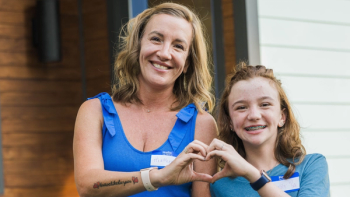
A lung cancer diagnosis can affect an entire family, and for Georgina, her journey has been one that she has navigated alongside her father. At 42, Georgina is living with lung cancer after previously experiencing another cancer diagnosis. Throughout her treatment, she has leaned on her family, the lung cancer community and the lessons she learned from her first cancer experience.
Her father Jorge has been by her side as both a caregiver and someone who understands the cancer experience himself as a survivor. Together, they have found ways to stay hopeful, support one another and focus on the moments they can share. Here, Georgina and her father discuss navigating cancer as a family, the importance of community and self-advocacy, and what has helped them keep moving forward.
Georgina: I would say my biggest challenge was dealing with the fact that I had lung cancer — just the shock of it. Having to explain to people that I had cancer, dealing with their reactions and my feelings, and just trying to find the correct information.
It’s a lot to deal with at first.
Georgina: Since I had another diagnosis literally just a year before and got cancer-free from that, I knew there was hope that you could one day not have it.
Then, almost to the day, a year later, I got diagnosed with lung cancer.
Knowing that I had already gotten through cancer helped me remember that there was still hope.
Georgina: Different organizations such as LiveLung, Facebook groups and talking to people have really helped me.
Even if someone you meet doesn't have cancer, they may have a friend, coworker or family member who does. Cancer affects so many of us.
And also humor. I have to have humor. I'm just a funny person as it is. If you don't laugh, I think a lot of times you'll just cry. You may cry and laugh at the same time, but definitely humor and talking to people and not isolating myself have really helped me.
My three little chihuahuas help me, too. I try to live in the moment and smile. That's all we can do — and pray.
Georgina: LiveLung definitely helped me. I was fortunate because it was only two months after I got diagnosed that I found LiveLung through the internet.
I was up late at night, living at home by myself, looking for something to help me, and there it was.
Before I knew it, I was going to Charlotte, North Carolina, to meet other people like me.
I actually met two people who were almost the exact same age as me, and we just shared so much. It was like we knew each other for so long, and it had only been a couple of days.
We talk all the time and message each other on Facebook. We talk about things other than cancer, too — just our regular lives.
It's been ideal. I just told the woman who founded LiveLung, "Thank you for making this organization," because I don't know what I would be doing if I didn't have them.
It's like a family. We're all family here, and we all support each other, laughing or crying.
Jorge: I've always tried to be strong for my family and try to stay calm because I've got to be around to help her. So I've got to take care of myself.
I'm there for her, and I'm there for my wife when I see that she's getting stressed out. I tell her, "Everything's going to be great. It's going to be great."
Georgina: Build a community. It's not just your doctor. It's not just your immediate family and your friends. It can be strangers.
Find some kind of support group, and also advocate for yourself.
Do not depend on someone or something to do something for you, even if they're a medical professional. If you don't agree with them or how they're treating you, find someone else.
Definitely advocate and ask questions. Keep asking and keep asking. That's the best thing that you can do for yourself, I feel.
Jorge: Exercise is a key thing to help me out with my own cancer. Stay exercising and stay mobile, and just appreciate the people around you.
I appreciate the medical people who are there listening to all these people who are ill. Sometimes my doctor would look at me and I would try to make him smile because he looks sad.
I appreciate medical people taking the time to take all these hard courses and study to help people.
Georgina: Staying calm, staying connected to people and not isolating myself have really helped me.
I try to live in the moment and smile. And I try to make other people smile, too.
We're all going through something, and having people around you who understand — whether they're family, friends, other patients or complete strangers — can make a difference.
For more news on cancer updates, research and education,