After breast cancer at 30, Aisha shares her journey through motherhood, a double mastectomy, body image struggles and the challenges of survivorship.
This device detects and characterizes lesions on low-dose CT scans, helping patients with cancer get faster, tailored care and avoid unnecessary procedures.
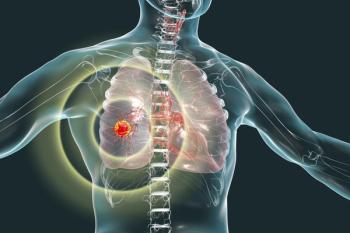
Median Technologies’ eyonis LCS has received FDA clearance as software designed to help clinicians assess the likelihood that a lung lesion detected on low-dose CT is malignant, according to Oran Muduroglu, executive chairman and president of Median Technologies, who is leading U.S. commercialization of the product.
In current clinical practice, indeterminate lung nodules are often monitored with serial imaging for several months because biopsy procedures can carry risks. While this approach can help avoid unnecessary invasive procedures, it may delay diagnostic clarity for some patients.
Risk-assessment software such as eyonis LCS is intended to provide additional information to support clinical decision-making about whether further imaging, tissue sampling or continued monitoring is appropriate. Reported performance metrics for the platform include 93.3% sensitivity, 92.4% specificity and a 99.9% negative predictive value for identifying malignant versus benign nodules. Clinical outcomes data derived from real-world patient data were used as part of the evidence supporting the software’s FDA clearance.
The platform is designed to work alongside established lung cancer screening and diagnostic pathways. By enabling both detection and characterization of lung nodules at the same time, the technology aims to help radiologists more effectively differentiate cancerous from benign nodules and inform next steps in care.
How could this technology change the timeline between an initial scan and getting clear answers about what's going on?
Depending on what is seen in the original lung cancer screening, patients normally undergo a standard monitoring process because performing a biopsy in the lung carries real risks. Monitoring a lesion over three to nine months can be complex, and during that time, patients often experience anxiety. The lesion may progress slightly, but with our technology, we can characterize the likelihood of malignancy — ranging from 99% down to lower-risk levels.
This information helps the care team decide whether to proceed with a diagnostic CT, a nuclear scan, a biopsy, or potentially an ablation. It allows for a more tailored, expedited care plan based on the severity indicated by our assessment, without having to wait the full three to nine months.
Transcript has been edited for clarity and conciseness.
For more news on cancer updates, research and education,