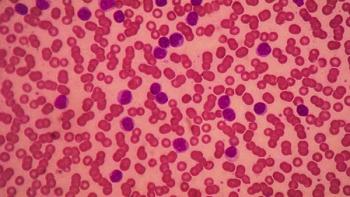
Replacing two cycles of intensive chemotherapy with Blincyto raised four-year event-free survival to 83% from 70.3% in children with high-risk B-cell ALL, with far fewer infections.
Amanda shares advice on resilience, self-advocacy and finding strength while navigating cancer survivorship and chronic GVHD.
Navigating life after cancer requires more than physical recovery; it demands emotional resilience, self-awareness and a willingness to adapt. For Amanda, survivorship has meant learning how to live with uncertainty, manage chronic graft-versus-host disease and still find moments of joy and purpose.
In this portion of her conversation with CURE, Amanda offers heartfelt advice to patients earlier in their journey, encouraging them to embrace their emotions and advocate for their needs.
You can
CURE: Thinking about others who may be earlier on in their cancer journey or who may have been just diagnosed, what would you like them to know?
Amanda: Number one: your feelings are valid. It might be hard to express what you're going through to your doctors or loved ones, but know that you're not alone. When you're going through all these tests, it might feel hard and scary, and you might think, "What's the point?" However, I want them to know that it's okay to be mad, scared, and feel anger, because these are all emotions.
When you walk through the door of the doctor's appointment, make sure you walk with your head up. I like to say this as a joke to some of my friends: "Be the supermodel that you are." Walk through that door with your head held high. Just because you have a diagnosis or cancer doesn't mean that's going to take away from your personality and who you are. Own it. Yes, I have a diagnosis. Yes, my name is Amanda and I've had leukemia twice, seven brain surgeries prior to that, and I have chronic graft-versus-host disease, but that doesn't define who I am.
CURE: I wanted to ask, after reflecting on everything you've been through, what does the word "resilience" mean to you today?
Amanda: Resilience means fighting. I've been through a lot in my life with medical challenges, but being resilient is bouncing back, looking at the glass half-full instead of half-empty, and being optimistic that there is a brighter tomorrow. Resilience means making sure we don't dwell on the hard days all the time, but remembering that this is the storm, and after the storm comes a rainbow.
Sometimes the storm is brutal. Sometimes we crawl into bed and wait. But it's not going to last forever. Resilience is bouncing back and being optimistic that tomorrow is a better day.
CURE: That was a wonderful message. Thank you for that, Amanda. Is there anything I didn't ask about that you want to add before we officially wrap things up?
Amanda: I just want to make sure everyone out there knows they're not alone. When you're in pain or can't get out of bed, it can feel isolating. When you have chronic graft-versus-host disease, life can be difficult. If I'm going to a football game with my son, I make sure I schedule time for my body to heal afterward. But I'm here and I'm alive.
Find hobbies. I love playing the piano, watching football, and crafting. Those things can help you get out of the mental struggle. Find shows you like to watch. When I was in the hospital, my friends and I had Zoom meetings where they would send me wigs and we would do a karaoke night.
My friends would do a "cooking show" on Zoom, and I would watch them like they were on the Food Network. There are little things you can do when you're having a bad day. You can find a show, start writing, or write a poem. Little things like that help you get through that difficult phase of the graft-versus-host disease journey.
CURE: Those are some wonderful tips. Thank you so much again, Amanda, for your time today. It was wonderful to hear you walk through everything.
Amanda: Thank you so much. I really appreciate you having me. It's a hard diagnosis because it's not well-known… I often need to be my own advocate when I walk through the doctor's office.
Stem cell transplant is newer, so not every doctor knows about it. If I go to a dermatologist who doesn't know about GVHD, I bring my pamphlet. When my bones and joints hurt, I went to a few orthopedic doctors who didn't know what it was. I had to go back to my oncology team and ask if they knew anyone. It can be mentally taxing to go to a doctor for help when they have no idea about your diagnosis or how to treat it.
That's why community is so important. We help each other navigate it — patients helping one another. Doctors might not talk to you about dry eyes, for instance. I had a friend who had to have a cornea transplant because of GVHD in her eyes, and had no idea about that. Hopefully one day GVHD will be known by all doctors and we'll be able to help more people.
CURE: Until then, thank you again for what you do.
Disclosures: Amanda is a paid Sanofi spokesperson and was engaged to share her story with chronic GVHD, but individual experiences may vary.
Transcript has been edited for clarity and conciseness.
For more news on cancer updates, research and education,