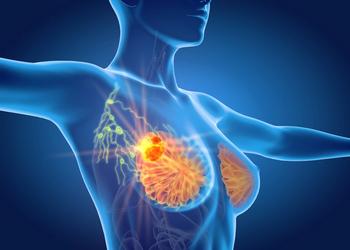
A study found that sentinel lymph node biopsy rarely missed remaining cancer in patients with locally advanced breast cancer whose lymph nodes responded to chemotherapy before surgery.
Researchers have revealed how patients with metastatic breast cancer develop resistance to Enhertu treatment.
Researchers have announced information revealing how patients with metastatic breast cancer develop resistance to the treatment Enhertu (trastuzumab deruxtecan, T-DXd) in Nature’s npj Breast Cancer journal. By analyzing large-scale real-world data and molecular profiles of 2,799 patients, scientists identified specific genetic markers that explain why some patients respond better to the therapy than others. The findings, released through the Texas-headquartered company Caris Life Sciences, suggest that looking at a patient's RNA and protein expression can provide actionable insights into how they will fare on the medication beyond standard HER2 classification.
The research identified two primary genetic predictors that influence how long a patient with breast cancer may survive while being treated with Enhertu. Using whole transcriptome sequencing (WTS), which looks at the RNA in a cell, scientists found that the genes ERBB2 (HER2) and ABCC1 were the strongest predictors of overall survival specific to T-DXd.
Patients with higher ERBB2 expression showed improved clinical outcomes. Conversely, higher expression of ABCC1, an ATP-binding cassette transporter involved in pumping drugs out of cells, was linked to poorer outcomes. Notably, the study found that ABCC1 acted as an independent predictor of overall survival, meaning it could help doctors understand a patient's outlook regardless of whether their cancer was classified as HER2-low or HER2-positive.
The data also highlighted how the cancer changes after exposure to the drug. In samples taken after treatment, researchers observed an increase in ABCC1 expression. They also found an enrichment of mutations in several key genes, including:
These molecular shifts suggest that the cancer cells find biologically plausible routes to acquired resistance, such as increasing drug efflux through ABCC1 or altering the targets the medicine is designed to find.
The study utilized an expansive real-world clinico-genomic database to perform a population-level analysis of 2,799 patients with breast cancer who were treated with Enhertu. This antibody-drug conjugate is currently approved by the FDA for patients with HER2-positive and HER2-low metastatic breast cancer.
To uncover the biological pathways of resistance, Caris researchers used comprehensive multiomic profiling. This included whole exome sequencing (WES), which examines DNA, and whole transcriptome sequencing (WTS), which looks at RNA.
Scientists used a statistical method called multivariate Cox proportional hazards to analyze a cohort of patients with breast cancer. In patients where samples were collected before starting Enhertu treatment, they measured how ERBB2 and ABCC1 expression levels impacted survival. They also compared post-treatment samples to unmatched samples from patients who had not yet received the drug. This allowed them to see how the molecular makeup of the cancer evolved when exposed to the therapy. The study also included preclinical models to confirm that ABCC1 plays a functional, context-dependent role in drug resistance.
The study focused on the clinical challenge of treatment resistance. Because resistance to Enhertu is common, the researchers emphasized that standard HER2 testing may not be enough to fully inform therapy selection or predict how a patient will respond over time.
The study found that ABCC1 could further stratify outcomes even within established HER2-defined subgroups. By identifying these resistance mechanisms — such as the role of ABCC1-mediated drug efflux — the research aims to help equip the medical community with insights to guide next-generation drug development and more precise methods for selecting therapies. Identifying these mechanisms may lead to improved methods of precision oncology and novel therapeutic approaches to overcome resistance, potentially improving the human condition through better monitoring and therapy selection.
“Caris Life Sciences' Real-World Data Uncovers Metastatic Breast Cancer Patient Responses and Resistance to Trastuzumab Deruxtecan,” news release.
Editor's note: This article is for informational purposes only and is not a substitute for professional medical advice, as your own experience will be unique. Use this article to guide discussions with your oncologist. Content was generated with AI and reviewed by a human editor.
For more news on cancer updates, research and education,