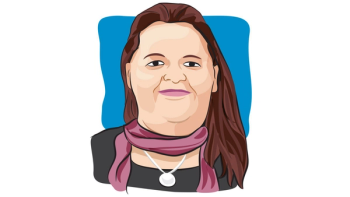
Martha Carlson reflects on her 11 years with metastatic breast cancer and explores how resilience, purpose and the stories we tell ourselves shape the cancer experience.
Living with metastatic breast cancer means balancing hope, fear and reality. One survivor shares why words of support can sometimes miss the mark.
“You can beat this.”
“You’re a survivor.”
I have heard these things countless times since my metastatic breast cancer diagnosis. In response:
“Hmm, I think you haven’t been listening to me.”
“Blech.”
Everyone means well, from my family all the way to the postman who took my hands yesterday and said, “I know you’re going to beat this.” Mostly I just say thank you, sharing a fact or two about metastatic breast cancer that I figure, before I even open my mouth, will most likely go in one ear and out the other. It isn’t that people don’t care. It’s that they don’t want to know unless this exact diagnosis touches them personally.
They really don’t want to know. It is scary to be confronted with things we can’t control. To not have an answer to the most basic of questions: Will this save my life?
Even though I live with a terminal disease, surviving years beyond my prognosis and doing well to this day, I’m guilty of temporary willful blindness toward someone else’s experience. Ignoring or minimizing, just for a moment, so that I don’t have to face what I already know. Self-protection is what I name it, though that does little to ease feelings of guilt. It is hard to be vulnerable and open ourselves up to others’ pain and fear. It is hard to sit next to someone you are pretty sure you’ll never see again.
A few months ago, a friend with metastatic breast cancer sent me an e-mail with a subject line of “I know you don’t want to hear this.” No. No, I did not want to hear it. I didn’t want to know it. I didn’t want to go anywhere near that e-mail. Of course I did open it, because that is what friends do, and the news was not good. She opened with “You are tough as nails.” That alone got me well into the first paragraph of her message. She probably knew those words would make me smile.
You have to be tough as nails to live with metastatic cancer. You have to be tough while also being soft and open. It’s just another thing we balance, like holding both hope and despair in our hands. I fight to keep that sense of balance present in many areas of my life, but most of all when it comes to cancer.
I could get angry and frustrated by the people who say what feels like empty words of support. I could hold a grudge toward those who call me a “survivor.” Okay, I sometimes do those things, but mostly I am tough as nails, putting aside my anger, fear and hurt to be present for others and for myself.
We learn to do this with cancer. To give grace when it is deserved and sometimes when it isn’t. We can do this for others, saving the truthful response for the people who matter in our care (the doctors, the nonprofits, the drug companies), and for ourselves. There is always the opportunity to be better, do better, live in way where you will have fewer regrets. And, while I will never accept the word “journey” as a cancer description, I do know what it means to follow a path. This path of grace is the one I want to take.
For more news on cancer updates, research and education,