

The addition of Keytruda to chemoradiation, followed by maintenance Keytruda, did not lead to a statistically significant event-free survival benefit in patients with locally advanced head and neck squamous cell carcinoma.

Brielle Benyon, Assistant Managing Editor for CURE®, has been with MJH Life Sciences since 2016. She has served as an editor on both CURE and its sister publication, Oncology Nursing News. Brielle is a graduate from The College of New Jersey. Outside of work, she enjoys spending time with family and friends, CrossFit and wishing she had the grace and confidence of her toddler-aged daughter.
Follow Brielle on Twitter @Brielle_Benyon.
The addition of Keytruda to chemoradiation, followed by maintenance Keytruda, did not lead to a statistically significant event-free survival benefit in patients with locally advanced head and neck squamous cell carcinoma.

An esophageal cancer survivor noted that recovering from surgery to treat the disease was “grueling,” but he said he was eventually able to return to some normalcy with his ability to eat his favorite foods.

ART27.13 may help increase appetite in patients undergoing cancer treatment.
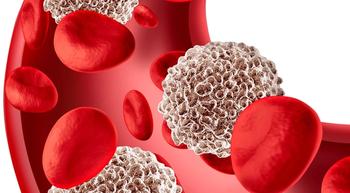
Cosela tended to decrease myelosuppressive events — when the bone marrow is not working sufficiently to produce blood cells and platelets — in patients receiving chemotherapy for extensive-stage small cell lung cancer.
Watch Dr. Jedd D. Wolchok, from Memorial Sloan Kettering Cancer Center, discuss immunotherapy, during the CURE Educated Patient Skin Cancer Summit.

The first patient was dosed in a phase 2 trial studying the efficacy of sapanisertib in patients with NRF2-mutant relapsed/refractory lung cancer.
Thanks to the FDA approval of immunotherapy agents, the average survival for patients for stage 4 melanoma has drastically increased over the past 20 years, an expert explained.
Watch Dr. Sherrif Ibrahim, from the University of Rochester Medical Center, discuss topical treatments during the CURE Educated Patient Skin Cancer Summit.

The FDA approval of Breyanzi, a novel CAR-T cell therapy, provides many patients with lymphoma a new treatment option that can be used earlier in the course of their disease, according to an expert.

Treatment with praluzatamab ravtansine improved outcomes in some patients with breast cancer, though one expert noted further study of the drug is needed.

In a clinical trial, the use of Tukysa plus Herceptin demonstrated promising results in treating patients with HER2-positive metastatic colorectal cancer.
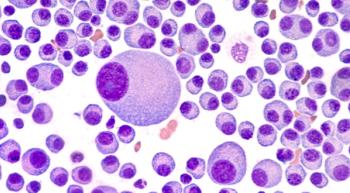
The myeloma treatment group of the COVALENT-101 clinical trial recently started, analyzing the new drug BMF-219 in patients with relapsed or refractory disease.
Watch Dr. Barbara Ma, from Weill Cornell Medicine, discuss the basics of basal and squamous cell carcinomas during the CURE Educated Patient Skin Cancer Summit.

Long-term clinical trial data showed that the use of Copiktra was associated with an increased rate of death and severe side effects for patients with chronic lymphocytic leukemia and small cell leukemia.
Watch Emily Huskey, from the Winship Cancer Institute of Emory University, discuss diet and exercise, during the CURE Educated Patient Metastatic Breast Cancer Summit.

From “General Hospital” star Cameron Mathison discussing his cancer experience to Dame Deborah James and Hells Angels founder Sonny Barger dying of the disease, here’s what happened in the cancer space this week.
The study the FDA allowed to continue is investigating the safety and efficacy of the novel cancer drug ACR-368 in patients with endometrial, urothelial and ovarian cancer.
Here is a roundup of cancer treatments that were approved by the FDA in the spring of 2022 that patients may have missed.
Spring 2022 brought in some landmark blood cancer approvals from the FDA. Here is a roundup of the therapies recently approved by the FDA that patients may have missed.
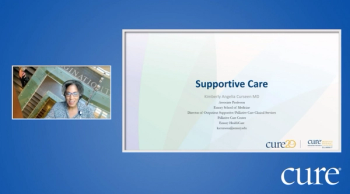
Watch Dr. Kimberly Curseen, from Winship Cancer Institute of Emory University, discuss supportive care, during the CURE Educated Patient Metastatic Breast Cancer Summit.

The FDA approval of Breyanzi, a CAR-T cell therapy, offers patients with relapsed/refractory lymphoma the opportunity for long-term remission, and hope for a cure, one expert said.

From Robin Roberts’ personal message about her partner, Amber Laign’s cancer, to a dancing group inspired by an “America’s Got Talent” contestant who died of cancer, here’s what is happening in the cancer space this week.
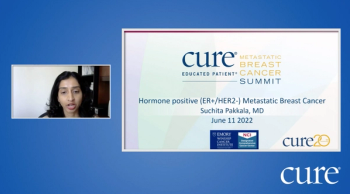
Watch Dr. Suchita Pakkala, from Emory University School of Medicine, discuss estrogen receptor-positive disease, during the CURE Educated Patient Metastatic Breast Cancer Summit.

Tafinlar plus Mekinist is now approved by the Food and Drug Administration to treat adults and children over the age of 6 who have BRAF V600-mutant advanced solid cancers.

The National Comprehensive Cancer Network updated its guidelines to recommend Fotivda for patients with pretreated renal cell carcinoma, a type of kidney cancer.

Recent study findings demonstrate that certain older women with breast cancer may be able to skip chemotherapy after treatment with endocrine therapy.

A phase 2a trial is kicking off to study frontline GB1211 with the immunotherapy agent Tecentriq in patients with advanced or metastatic non-small cell lung cancer.
Watch Dr. Landon C. Brown, from Atrium Health Levine Cancer Institute, discuss approaches to hormone therapy, during the CURE Educated Patient Prostate Cancer Summit.
Watch Dr. Tian Zhang, from UT Southwestern Medical Center, discuss novel agents, during the CURE Educated Patient Prostate Cancer Summit.
Watch Dr. Jeremie Calais, from UCLA, discuss novel imaging strategies, during the CURE Educated Patient Prostate Cancer Summit.