

Treatment with Cabometyx before surgery in patients with advanced renal cell carcinoma, a type of kidney cancer, may provide benefits, although further research is required before a decision is made about its role in presurgical treatment.
Treatment with Cabometyx before surgery in patients with advanced renal cell carcinoma, a type of kidney cancer, may provide benefits, although further research is required before a decision is made about its role in presurgical treatment.

Although the data failed to identify a predictive biomarker in patients with advanced kidney cancer, an expert from Memorial Sloan Kettering Cancer Center in New York notes that the results indicate that no one should be excluded from receiving Lenvima plus Keytruda.

Tecentriq failed to meet the progression-free survival goal in a trial analyzing the immunotherapy agent in advanced squamous cell carcinoma of the penis.

Patients with nonmetastatic castration-resistant prostate cancer who were taking other medications or had health complications still derived a survival benefit from treatment with Nubeqa, research showed.

Fotivda – a TKI drug that was approved last year – not only improved survival outcomes, but was also very tolerable in terms of side effects for patients with metastatic renal cell carcinoma.

Prehab and rehab may help patients with cancer who are receiving CAR-T cell therapy return to health or even better, but there are still challenges.

Treatment with a combination of PD-1 inhibition, minimally invasive chemotherapy and Lenvima improved outcomes for patients with unresectable liver cancer compared to PD-1 inhibition and Lenvima alone.

An expert from Memorial Sloan Kettering Cancer Center in New York discusses the promising findings from a study that analyzed tremelimumab plus Imfinzi for unresectable hepatocellular carcinoma, and outlines side effects patients should discuss with their doctor.

Single-agent adagrasib was associated with encouraging treatment responses in patients with previously treated non-colorectal gastrointestinal tumors and pancreatic ductal adenocarcinoma.

Patients with biliary tract cancer achieved a better survival outcome after receiving treatment with an oral antimetabolite following surgical resection than patients who only were treated with surgery.

A group of patients with microsatellite-stable, treatment-refractory metastatic colorectal cancer experienced responses to treatment with Keytruda plus Mektovi and Avastin.

The use of a ctDNA assay could help determine which patients with colorectal cancer may benefit most from chemotherapy after surgery.

Patients with gastric cancer who present with certain bacteria in their gut were found to be more likely to experience skin-related side effects from Opdivo treatment, research showed.

The use of a non-invasive procedure combined with Lenvima plus Tyvyt demonstrated safe and effective results in patients with liver cancer not eligible for surgical resection.

Researchers observed this benefit in recurrent HCC after liver transplantation, which represents a patient population often excluded from clinical trials due to potential organ rejection.
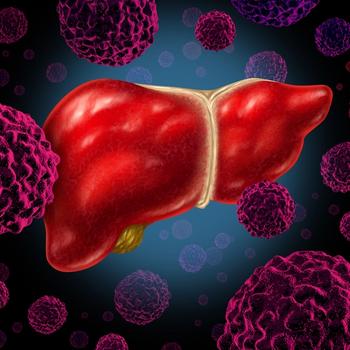
Treating patients with liver cancer initially with Lenvima instead of the standard of care was associated with a survival benefit, according to recent research.
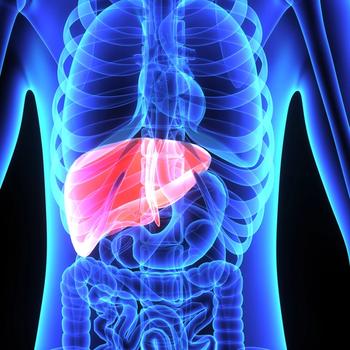
The use of a minimally invasive procedure — known as trans-arterial chemoembolization — plus Lenvima and a PD-1 checkpoint blockade drug proved to be safe and efficacious in patients with unresectable advanced liver cancer.

The use of Enhertu was associated with a reduction in the risk of death compared with standard chemotherapy in certain patients with gastroesophageal and gastric cancer.

An expert discusses improvements in survival outcomes for patients with triple-negative breast cancer who received Keytruda plus chemotherapy — now considered the standard of care — but urges that more researched is always needed for this patient population.

Premenopausal women with ER-positive breast cancer experienced a decreased rate of recurrence when given an aromatase inhibitor, compared with those given tamoxifen. However, more research is still needed, an expert said.
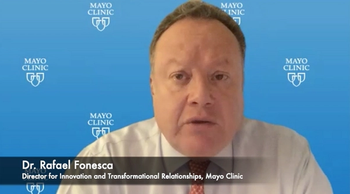
An expert from the Mayo Clinic explained that the use of a combination of drugs including Darzalex in the first-line setting may lead to better outcomes for patients with multiple myeloma instead of other first-line standard-of-care options.

The use of Faslodex plus the investigational drug samuraciclib was considered safe in individuals with heavily pretreated hormone receptor-positive breast cancer.

The use of Enhertu may also be beneficial across HER2-positive metastatic breast cancer subgroups including patients with and without brain metastases.

The combination of Keytruda and chemotherapy improved survival rates in patients with PD-L1—positive metastatic triple-negative breast cancer.

Findings from a clinical trial showed that adding Keytruda to neoadjuvant chemotherapy in patients with triple-negative breast cancer significantly improved outcomes and was overall safe and tolerable for patients.

Treatment with the CAR-T cell therapy ciltacabtagene autoleucel (cilta-cel) led to a 97.9% response rate at two years in patients with relapsed/refractory myeloma in a recent clinical trial.

Two different doses of Venclexta combined with Darzalex and the steroid dexamethasone elicited effective responses appeared safe in patients with t(11;14) relapsed/refractory multiple myeloma.

The addition of a drug commonly used to treat arthritis may reduce the risk of graft-versus-host-disease in patients who underwent haploidentical allogeneic stem cell transplant.

Calquence, a next-generation BTK inhibitor, significantly prolonged survival compared with standard of care, along with no new side effects at three years in chronic lymphocytic leukemia. These findings also pertained to some patients with high-risk genetic features.

The data demonstrated that the combination of Imbruvica and Rituxan conferred superior progression-free survival results in patients with previously untreated chronic lymphocytic leukemia, compared with the chemotherapies fludarabine and cyclophosphamide plus Rituxan.