



The Food and Drug Administration approved the first and only erythroid maturation agent to treat patients with MDS who require red blood cell transfusions and have failed an erythropoiesis stimulating agent.
The Food and Drug Administration approved the first and only erythroid maturation agent to treat patients with MDS who require red blood cell transfusions and have failed an erythropoiesis stimulating agent.

A survivor talks about leaving the gate open and racing out of it when diagnosed with cancer.

Patient advocacy group Facing Our Risk of Cancer Empowered addressed individuals with hereditary cancer syndromes to offer suggestions for decreasing anxiety and fear during the COVID-19 pandemic.

From an investigational cancer therapy being studied as a treatment for COVID-19 to the NBA and NHL helping to raise over $500,000 for prostate cancer research, here’s what’s making headlines in the cancer space this week.
Two hematologist/oncologists on the LLS leadership team, and experts in the field of blood cancer, answer questions and concerns about coronavirus (COVID-19).
Practicing kindness can help survivors, patients and everyone else get through this pandemic together.

A new study links e-cigarette use to bladder cancer but experts say more research is needed.
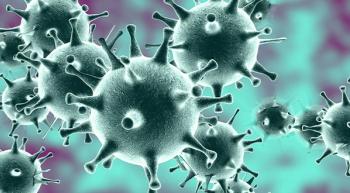
As the novel coronavirus outbreak begins impacting many facets of cancer care in the United States, it’s easy to have possibly missed some of the news surrounding COVID-19 and cancer. Here are four things that our readers may have missed.
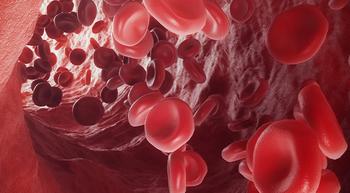
Help others in need by donating blood where possible!
At the best of times, cancer is a difficult burden to bear, but in the midst of a pandemic, it's especially worse. But patients with cancer know the way out is by going through.
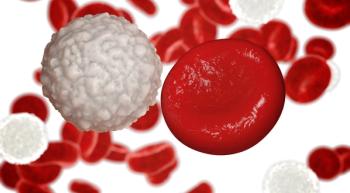
The COVID-19 pandemic's impact is being felt all throughout the cancer community, and experts from the CLL Society hosted a webinar to discuss the specific impacts of the pandemic on patients with chronic lymphocytic leukemia.

Here are the top 5 stories from CURE® for March 2020.

Although the absolute risk for colorectal cancer is very low for young people, one expert warns the incidence is increasing.
One survivor on "New Normals" and living through "apocalyptic" times that reveal who we really are.
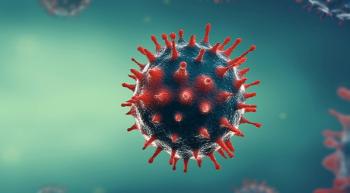
Researchers from China examined the impact that coronavirus has on patients who are receiving anti-cancer treatment.

The development of an inpatient symptom monitoring intervention, according to researchers, may enhance awareness of patient symptom burden and improve symptom control and health care usage.
One survivor reflects on how quarantine amid the coronavirus outbreak is impacting her life and reflects on current events.

The Food and Drug Administration approved Imfinzi in combination with certain standard-of-care chemotherapies in extensive-stage small cell lung cancer, as the therapy improves median overall survival.
30 years after cancer treatment, one survivor returns to the Ronald McDonald House that made a major difference in their cancer journey.
Making sense of a difficult situation feels like wading through quicksand. The more we struggle, the deeper we get. However, cancer survivors know how to face the fear of uncertainty even the uncertainty of the COVID-19 pandemic.
Survival strategies for her best life help this metastatic cancer patient navigate a new world in the wake of the COVID-19 pandemic.
What can cancer survivors do to cope and process the scale of the COVID-19 pandemic?
While patients with cancer and survivors face extra risk due to the COVID-19 pandemic, they are more adept at handling the uncertainty and fear than one may think.
From patients having to reschedule treatment appointments due to the novel coronavirus (COVID-19) outbreak, to clinical trials being put on hold, here’s everything you need to know about how the COVID-19 pandemic is impacting patients with cancer.

Dr. Shelley Johns, a researcher with the Indiana University Melvin and Bren Simon Comprehensive Cancer Center and Regenstrief Institute, offers advice on how survivors and patients with cancer can recognize and manage the stress they may be experiencing as a result of the COVID-19 pandemic.

Estimates indicate that cancer will become the number one leading cause of death in the United States over the next five to 10 years. But, as one expert argued in a policy roundtable, there are ways to significantly decrease that rate.

Many health systems that treat people with cancer are recommending virtual visits, both for patients who need routine checkups and those who suspect they have the virus known as COVID-19.
In the time of this pandemic, we're all in this together and need to give back where we can.

Researchers suggest that patients with advanced non-small cell lung cancer who have limited daily functions should be better educated about therapy decisions.

Here is a list of the recent trial initiations that occurred within the cancer space in March.