





Being able to wait is a skill many patients with cancer learn to acquire, but that doesn't make it easy. Here's how to get your own patience power.
Being able to wait is a skill many patients with cancer learn to acquire, but that doesn't make it easy. Here's how to get your own patience power.
Patients with relapsed and resistant diffuse large B-cell lymphoma can look to new treatments beyond tried-and-true chemotherapy.

The Food and Drug Administration approved the combination of Nerlynx and Xeloda for adults with advanced or metastatic HER2-positive breast cancer. Here’s what you need to know.
Everything changes after a cancer diagnosis, and the ramifications can follow you into the workplace.

The combination of Kisqali and Faslodex shows improved overall survival in patients with hormone-receptor-positive, HER2-negative advanced breast cancer.

The WISDOM trial seeks to determine if a personalized approach to screening for breast cancer is better than an annual mammogram.

We're kicking off the CURE Recipe Swap with reader Tricia K.’s recipe for Shiitake Mushrooms and Kale Over Smashed White Beans, a hearty meatless meal that’s packed with flavor and nutrients.
Writing can provide a release for all the emotions bottled up inside that you can't quite say out loud, and can help when coping with the cancer journey.

The Food and Drug Administration approved Sarclisa, as adding the targeted drug to combination therapy delays the progression of multiple myeloma in previously treated patients.
It's the often-overlooked little details that make the most impact on a patient's trip to the cancer center.

In deciding when to undergo mastectomy or oophorectomy, women with BRCA gene mutations must weigh the importance of their fertility against their anticipated longevity.
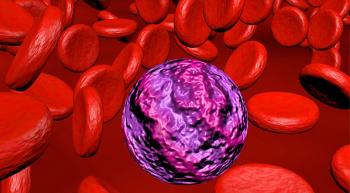
Treatment options for patients with acute myeloid leukemia are limited, especially for older patients, but a new trial looking at novel therapy combinations could change the treatment landscape.
Is it possible to determine better cancer treatment with information obtained from a patient’s blood cells? One Israeli company seems to think so.
There's only one thing better than hearing you don't have cancer.
Hotter than a pistol, words and thoughts have the power to make us crazy. But we can determine how we move forward with them.

From New Jersey Governor Phil Murphy announcing he will undergo surgery to remove a potentially cancerous tumor on his kidney to an NHL team granting a 15-year-old fan with cancer the ultimate wish, here’s what is making headlines in the cancer space this week.

Here is a list of the recent trial initiations that occurred within the cancer space in February.

Patients with relapsed/refractory mantle cell lymphoma saw more favorable responses with the BTK inhibitor Imbruvica (ibrutinib) than with chemotherapy, according to nearly a decade of data.
One survivor offers her suggestions to handle chemo brain as she copes with her almost-10-year-old chemo brain.

Patients with a compromised immune system are more susceptible to the coronavirus, including those with cancer. Here are four key things patients with cancer should know about the novel coronavirus.
Don't be intimidated by the science presented at poster sessions at conferences. They can connect people living with cancer and cancer researchers in a way that helps both the patient and the researcher.
The Food and Drug Administration has granted approval to the combination of Nerlynx and Xeloda for the treatment of patients with advanced or metastatic HER2-positive breast cancer.

Men who identify as gay or bisexual report having more skin cancers than those who identify as heterosexual. More frequent use of indoor tanning could be a cause, but researchers want to find out for sure.
One survivor shares three things that helped her find a sense of control in the chaos that a cancer diagnosis can bring.

The combination of Keytruda plus chemoradiotherapy induced a ‘promising’ 12-month progression-free survival rate in patients with locally advanced non-small cell lung cancer.

51% of Americans 50-54 have not been screened for colorectal cancer. We know screening saves lives, here's why.
Stupid Cancer is excited to bring CancerCon® to Seattle, WA this April 16 - 19, 2020.
Sexual and gender minorities are not receiving the same standard of clinical care as other patients with cancer.
This article outlines three areas where LGBTQ patients and their caregivers may face challenges and how the Comprehensive Cancer Control Programs (CCCP) can address these needs. Written by Dr. Amari Pearson- Fields, the former Comprehensive Cancer Program Director for Washington DC.
A look at a survivor's survivorship appointment.