



Here are the top 5 CURE stories for December 2018.
Here are the top 5 CURE stories for December 2018.

As cancer survivors, we know what we should do to help ourselves stay as healthy as possible, but how do we keep up our motivation to do it?
It's the approach we take when handling trauma in our life that can make all the difference.

Inhibiting the immune system could decrease cognitive decline after radiation treatment, according to research conducted in mouse models.
A male breast cancer survivor discovers a challenge even bigger than his disease.
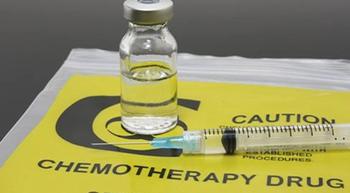
As researchers recently discovered, outcomes for patients with diffuse large B-cell lymphoma are just as good when the number of chemotherapy cycles is reduced.
How to conquer the fear of your own body, one step at a time.
Blogging carries great responsibility, especially when the cancer community is concerned.

A web-based intervention may help reduce harmful UV exposure and skin cancer risk in young adults, according to recent research.
Could having a conversation with your employer about a flexible work schedule help with your work-life balance after a cancer diagnosis?

The FDA has approved Ultomiris (ravulizumab-cwvz) as an injection treatment of adult patients with paroxysmal nocturnal hemoglobinuria (PNH), a rare blood disorder that leads to hemolysis.
Whenever I thought about my brother and his death, I used to feel tremendous survivor's guilt. He never knew he had Lynch syndrome when he was diagnosed with colon cancer.

The investigational targeted drug zanubrutinib (BGB-3111) appeared to be highly active, inducing an overall response rate of 83.5 percent in patients with relapsed/refractory mantle cell lymphoma, who were treated in a single-arm, open-label, multicenter, phase 2 trial.
When bad things happen to friends we care about, we often stand in silence because we don't know what to say.
Cancer reminds this survivor that we are much more than our bodies.
The Food and Drug Administration (FDA) approved Elzonris (tagraxofusp-erzs) infusion for the treatment of blastic plasmacytoid dendritic cell neoplasm in adults and in pediatric patients aged 2 or older.
The Food and Drug Administration approved Asparlas (calaspargase pegol-mknl) as a component of a chemotherapy regimen to treat adult and pediatric patients with acute lymphoblastic leukemia (ALL), according to the agency.
I was first diagnosed with cancer when I was six years old, and I can still remember passing the time during treatment by listening to the “weekly top 40” that my brother and I recorded on a cassette tape.
It's not the actual hand we are dealt when live throws us a curve. It's how we play it.
This is the first approval of a PARP inhibitor as a first-line maintenance treatment for BRCA-mutant gynecologic cancers.
The Food and Drug Administration (FDA) granted accelerated approval to Keytruda (pembrolizumab) for the treatment of adult and pediatric patients with recurrent locally advanced or metastatic Merkel cell carcinoma, according to the agency.
The Food and Drug Administration (FDA) approved BRACAnalysis CDx to be used to identify patients with advanced ovarian cancer who have germline BRCA mutations and are eligible for first line treatment with Lynparza (olaparib) after responding to platinum-based chemotherapy.

The combination use of Imbruvica (ibrutinib) with Rituxan (rituximab) significantly improved survival outcomes compared with standard of care in younger patients with chronic lymphocytic leukemia (CLL).
When a diagnosis begins to improve, it is hard to reconcile your identity as a patient with your identity as a whole. Grappling with questions of who you are after having been diagnosed with something life altering can be both profound and challenging, and leave you a bit, well, ambivalent.
Patients with myeloma who took higher doses of Kyprolis plus dexamethasone tended to have better survival outcomes, according to a recent study.

Single agent Copiktra (duvelisib) induced robust, durable responses in patients with relapsed/refractory chronic lymphocytic leukemia (CLL)/small lymphocytic lymphoma (SLL) who experienced disease progression after treatment with Arzerra (ofatumumab).
Two wrongs don't make a right.

Immunotherapy has become a buzzword in the cancer community, but to Sean Parker it’s much more. The 39-year-old billionaire is intensely focused on the promise of immunotherapy, and has become a major force in helping to drive its potential to cure cancers.

To address the lack of information on this younger subset of patients, an international team of researchers analyzed a large dataset from 29 hospital centers in 12 countries.
Rest is an important part of the healing process for those affected by cancer.