

I will be out on the street in New York City on November 1 to cheer on James Blake.
I will be out on the street in New York City on November 1 to cheer on James Blake.

The approval is based on results from the phase 3 EORTC 18071 trial, in which adjuvant Yervoy reduced the risk of recurrence by 25 percent versus placebo.

Lack of insurance is one of the greatest barriers to access to health care.

The idea of trading in a primary care physician for an oncologist still brings a knot to my stomach. I'm well aware that the biannual blood tests and annual X-rays have one purpose: scanning for the return of the monster.
Kevin realizes that the trauma caused by losing space shuttles turns out to feel a lot like finding out you have cancer — only lonelier.

The approval was based on results from the phase 3 OPTiM study in which Imlygic significantly extended durable response rates compared with GM-CSF.

Your loved ones and an army of health care providers can help you win.
It is a woman's choice to advocate for themselves, while assessing the risk for these types of tests that are available.
Facing chronic illness can change the way you see the world. It can also change the way the world sees you and how you interact with it.
Cancer is a terrifying word. Here's how to let the patient know the news is bad.
"I think I can, I think I can," says a two-time cancer survivor.
The approval is based on results from the phase 3 ET743-SAR-3007 trial.

To gain insight into the updated ACS breast screening guidelines, CURE spoke with our editor-in-chief, Debu Tripathy.
The approval was based on data from the phase 3 NAPOLI-1 trial, which demonstrated a 1.9-month improvement in overall survival (OS) with the addition of Onivyde to 5-FU and leucovorin.

A survivor shares the story of his experience with chronic myeloid leukemia.
Khevin Barnes was diagnosed with breast cancer while living in a Zen Buddhist temple in Hawaii.

The American Cancer Society has updated its breast cancer screening guideline to recommend that woman at an average risk of breast cancer should wait to undergo annual screening mammography until they reach the age of 45.
I may be ready to sign up for a big race to celebrate three years cancer-free, but it turns out that the fear of recurrence may never be far from my mind.
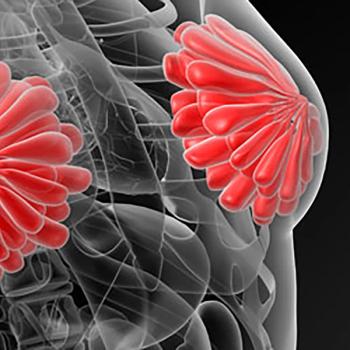
Debra Pratt, from the Cleveland Clinic Breast Health Center, writes that early detection and lifestyle changes can help save lives.
The Bladder Cancer Advocacy Network has announced its fall series of webinars, featuring bladder cancer experts on a variety of topics. The webinars are relevant to people with bladder cancer, caregivers, family, and friends:

While nearly 70 percent of patients and survivors agreed that working helps in their treatment and recovery, they acknowledged that cancer is accompanied by particular challenges in the workplace.
With pink popping up all over, and public service announcements everywhere we turn, it would be impossible to forget that October is Breast Cancer Awareness Month. When this month coincides with a personal experience with cancer, the messages become even more powerful. Mammograms do save lives. Tell a friend, tell a parent, tell a child.
Before I was diagnosed with metastatic melanoma, I lived in the sweet spot — both in life and in running.
Immunotherapy – it's the buzzword of the moment. It would be difficult to imagine an area of the field generating more excitement and hope than immuno-oncology is sparking right now.
If there is one thing that all cancers have in common, it's fear. Whether it is the fear of a known, of the unknown, of loss, or fear of pain and suffering, fear is one of the primary symptoms of this diagnosis.
Breast cancer and melanoma survivor ponders the impact of cancer on her capacity to cope with life changes.
Sometimes patients with cancer need to adjust their thinking to change how they view their disease

The agent gained a priority review designation for use in combination with dexamethasone for patients with relapsed multiple myeloma following prior treatment with at least one therapy, based on findings from the phase 3 ENDEAVOR trial.
Question: When do cancer scans shift from disease monitoring to routine checkups? Answer: You decide.
Two transplants, three mini triathons. Running the race for myself and others shows how lessons learned in the hospital translate to victory on the outside.