





When life hands you cancer lemons, what flavored lemonade do you make?

When life hands you cancer lemons, what flavored lemonade do you make?

Quality of life, sexual outcomes and self-image should be considered before choosing a treatment option for muscle-invasive bladder cancer, an expert said.

From Oliva Munn and Christine Brinkley discussing their cancer to Donnie Iris returning to the stage after his experience with the disease, here is what’s happening in the oncology space this week.

Artificial intelligence platform ChatGPT is capable of providing “widely understandable and accessible” answers about kidney cancer, but experts express caution.

My prostate cancer has come back and stronger, but so have I.

The Food and Drug Administration (FDA) has approved Opdivo (nivolumab) in combination with cisplatin and gemcitabine for the first-line treatment of adults with unresectable or metastatic bladder cancer, the agency has announced.
A phase 2 trial showed that Trodelvy plus Keytruda had a high response rate with lasting responses, emphasizing “potential additive or synergistic effects,” an expert said.

Looking back on my experience with testicular cancer at a young age, I realize that cancer didn't define me — it helped shape me.

Patients with locally advanced penile squamous cell carcinoma who responded to neoadjuvant chemotherapy followed by consolidative lymphadenectomy experienced improved long-term survival outcomes.

From International Childhood Cancer Day to an Ivory Coast soccer player making a victorious comeback after testicular cancer, here’s what is happening in the oncology space this week.

A 45-minute cancer procedure deemed me to be "cancer free," but it did not assuage all my anxieties.

From Tom Green to Deadpool, humor-based messaging has long been utilized for testicular cancer. Researchers aren’t sure how effective that strategy is.
In honor of Men’s Health Awareness Month, CURE® looked back on some of the most significant news within the oncology space.

We recently asked our audience of patients, survivors and caregivers about the ongoing cisplatin and carboplatin shortage. Here’s what they had to say.
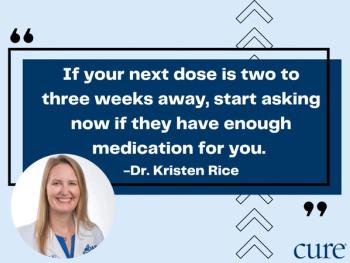
A chemotherapy shortage is resulting in altered treatment plans for many patients with cancer. CURE® spoke with experts about what that means for patients — and what they can do about it.

With 74% of testicular cancer survivors reporting hearing loss in a recent study, one expert advised patients to advocate for themselves and their hearing before, during and after cancer treatment with cisplatin-based chemotherapy.
Testicular cancer survivors who were treated with cisplatin-based chemotherapy may have hearing loss or ringing of the ears, which may significantly affect certain parts of life including sleep and concentration, among other factors.

As part of its Speaking Out video series, CURE® spoke with Michael J. Rovito, on behalf of the Testicular Cancer Foundation, about survivorship.

Robert Atteberry never gave up, even after three cancer diagnoses, and has found a motivation and passion for competing in triathlons during survivorship.

Study findings showed that anxiety and depression may not decrease over time in patients with testicular cancer, emphasizing the importance of discussing symptoms with cancer teams.

Testicular cancer survivors should talk with their care team if they are experiencing symptoms of anxiety, depression or sexual dysfunction.

From ESPN analyst Dick Vitale announcing he is cancer-free months following a lymphoma diagnosis to a Speedo-clad race in South Africa to raise awareness for cancer, here’s what’s happening in the oncology space this week.

During his college years, Matt Froestad received the diagnosis not once but twice following self-exams.

An intervention strategy focused on goal pursuit and skill building may be the ticket to helping reduce high emotional distress levels experienced by young adult survivors of testicular cancer.

It is important that the whole community understand that basic research and clinical trials can continue to improve outcomes for patients with genitourinary cancer.