



David S. Siegel, M.D., Ph.D., chief of the division of Multiple Myeloma at the John Theurer Cancer Center, attributes some of the progress in myeloma treatment to patients and how they advocate for themselves.
Elie Fahed, MD, provides an overview of what multiple myeloma is, and Beth walks us through her frustrating journey to initial diagnosis as an atypical patient.
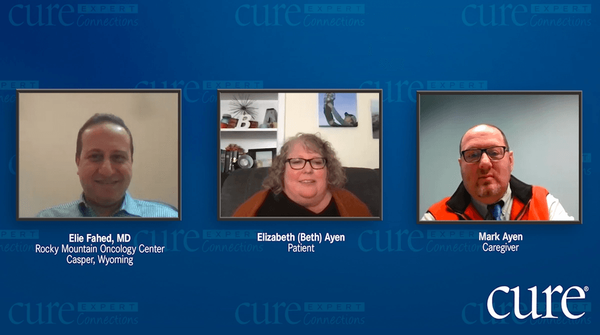
Cristina Gasparetto, MD, gives a brief overview of the multiple myeloma disease state and introduces us to Donna, one of her patients diagnosed with multiple myeloma.

David S. Siegel, M.D., Ph.D., chief of the division of Multiple Myeloma at the John Theurer Cancer Center, attributes some of the progress in myeloma treatment to patients and how they advocate for themselves.
The Food and Drug Administration (FDA) recently released a statement providing data from the two phase 3 trials testing Keytruda (pembrolizumab) in patients with multiple myeloma. The trials were placed on clinical holds by the FDA in July, after concerns arose regarding the drug’s safety in this group of patients.
Selinexor (KPT-330), a small-molecule inhibitor with a novel mechanism of action, is being investigated in patients with multiple myeloma (MM) who have become refractory to the many new options that have been introduced in recent years for patients with the malignancy.

Peter Voorhees, M.D., discusses the advancements in multiple myeloma treatment, as well as where he hopes the field will go in coming years.

The Food and Drug Administration (FDA) granted an approval to Darzalex (daratumumab) for use in combination with Pomalyst (pomalidomide) and dexamethasone for patients who have multiple myeloma who have two or more prior therapies, including a proteasome inhibitor and Revlimid (lenalidomide).

Merck will be pausing two trials testing Keytruda in patients with multiple myeloma.
Many patients with relapsed or refractory multiple myeloma saw clinical remission with CAR T-cell therapy.

Why do some patients succumb to their cancer in a matter of months, while others with the same disease live for years or even decades?
A team of patients, researchers, advocates and loved ones climbed Mount Kilimanjaro, Africa's highest mountain, to raise money for multiple myeloma awareness and research, benefitting the Multiple Myeloma Research Foundation.

Multiple myeloma advocate Eric Gelber makes history. Watch him as he makes his 200-mile journey.
Patients with multiple myeloma climbed Mount Kilimanjaro to raise money for a cure.

Jim Kochenderfer, M.D., lends insight to the future of CAR T-cell therapy for hematologic malignancies.
It is vital to have diverse groups of patients register for clinical trials so that treatment advances can continue to be made.

Kyprolis (carfilzomib) plus dexamethasone improved overall survival for patients with relapsed or refractory multiple myeloma.

The Food and Drug Administration (FDA) approved Revlimid (lenalidomide) for maintenance therapy for some patients with multiple myeloma.

CURE spoke with Eric Smith, M.D., Ph.D. about immunotherapy and other advances being made in multiple myeloma.
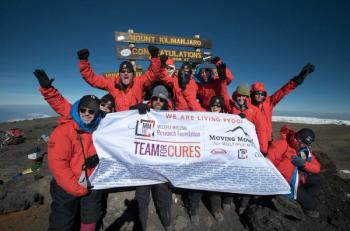
For the second year in a row, the Multiple Myeloma Research Foundation, Takeda and CURE Media Group will support the team of patients, family members, doctors and other participants as they trek Africa’s tallest mountain.
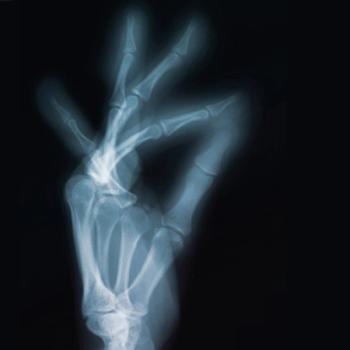
When zoledronic acid use happens less frequently, patients with breast cancer, prostate cancer or multiple myeloma with bone metastases did not see an increase in skeletal-related events.

This year, a group of patients, advocates and health care professionals will tackle Mount Kilimanjaro to raise money and awareness for multiple myeloma.

Stem cell transplant is still the only curative treatment option for many hematologic malignancies, even as novel drugs continue to emerge.
Cocktails of three, four or even five drugs of various classes are turning myeloma into a chronic condition.

A three-drug combination showed both tolerability and favorable overall response rates (ORR) for patients with smoldering multiple myeloma in a phase 2 trial.

A new combination, including the immunotherapy agent Keytruda, was shown to be highly effective in treating a subset of patients with myeloma.
A novel agent showed a 78 percent response rate for patients with relapsed/refractory multiple myeloma, according to a recent phase 1 study.