Leanne Citrone shares how a BRCA mutation, an elective mastectomy and a stage 2C ovarian cancer diagnosis shaped her outlook, anxiety and advice to others.
For Lung Cancer Awareness Month, five numbers from federal and American Cancer Society data show how survival for people with lung cancer has changed, how it differs by stage and type, and how many people are living with the disease.
An estimated 661,853 people in the United States were living with lung cancer in 2023, according to the National Cancer Institute's SEER program, which tracks cancer across the country. For Lung Cancer Awareness Month, here are five numbers from federal and American Cancer Society (ACS) data that describe how people with lung cancer are doing today, and what those numbers can and can't tell you.
One thing to keep in mind as you read: survival statistics describe large groups of people who were diagnosed years ago. They can't predict how any one person will do, and they don't fully reflect treatments approved in the last several years.
The ACS "Cancer Statistics, 2026" report, published in January 2026, found that 5-year relative survival for lung cancer rose from 15% for people diagnosed in the mid-1990s to 28% for people diagnosed from 2015 to 2021. Relative survival compares people with cancer to people of the same age and sex in the general population, so a 28% figure means people with lung cancer were 28% as likely as similar people without cancer to be alive five years after diagnosis.
SEER's most recent figure, based on a slightly different and newer set of data (people diagnosed from 2016 to 2022), puts 5-year relative survival for lung cancer at 29.5%. Both numbers show more people living longer after a lung cancer diagnosis than a generation ago. CURE covered the full ACS report when it was released in
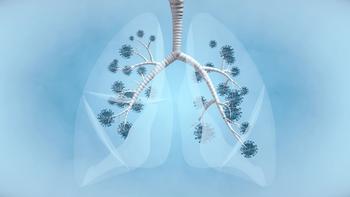
Stage describes how far the cancer had spread when it was first found. SEER groups lung cancer into three main stages: localized (still only in the lung), regional (spread to nearby lymph nodes, the small bean-shaped organs that are part of the immune system) and distant (spread to other parts of the body, also called metastatic or stage 4).
For people diagnosed from 2016 to 2022, SEER reports 5-year relative survival of 65.5% for localized lung cancer, 38.2% for regional lung cancer and 10.5% for distant lung cancer. These numbers apply only to the stage at first diagnosis and don't account for your age, overall health or the gene changes in your tumor.
According to SEER, 51% of lung cancers are diagnosed at the distant stage, 21% at the regional stage and 24% at the localized stage (the stage is unknown for the remaining 4%). That means most people learn they have lung cancer after it has already moved beyond the lung.
For people diagnosed at these later stages, the ACS report found some of the largest survival gains of any cancer. Between people diagnosed in the mid-1990s and those diagnosed from 2015 to 2021, 5-year relative survival rose from 20% to 37% for regional lung cancer and from 2% to 10% for metastatic lung cancer. Susan Warmerdam, who was diagnosed with stage 4 lung cancer in 2012, told CURE in a
There are two main types of lung cancer. Non-small cell lung cancer (NSCLC) is the most common and includes adenocarcinoma, squamous cell carcinoma and large cell carcinoma. Small cell lung cancer (SCLC) tends to grow and spread faster.
The ACS, using SEER data, reports 5-year relative survival of 32% for NSCLC overall (67% localized, 40% regional and 12% distant) for people diagnosed from 2015 to 2021. For SCLC, it reports 9% overall (34% localized, 20% regional and 4% distant), but those figures are based on people diagnosed earlier, from 2012 to 2018. Because the SCLC numbers are older, they reflect even less of the treatment that is available today.
SEER estimates that 661,853 people in the United States were living with lung and bronchus cancer in 2023. This count, called prevalence, includes people in treatment and people who finished treatment years ago.
Lung cancer remains the leading cause of cancer death; the ACS projects 229,410 new lung cancer diagnoses and 124,990 lung cancer deaths in the United States in 2026.
Your prognosis, meaning the likely course of your cancer, depends on far more than any of these averages. Your oncologist can look at details these numbers leave out, such as your exact stage, the subtype of your cancer, whether your tumor has a gene change that a targeted therapy (a drug aimed at a specific change in cancer cells) can treat, how your cancer has responded so far and your overall health. If you want to talk about prognosis, it can help to tell your oncologist how much detail you want, whether that is a broad picture or specific numbers, and to ask how your own situation compares with the groups behind these statistics. Some people prefer not to hear numbers at all, and that is a valid choice. Bringing someone you trust, or revisiting the talk after a scan or treatment change, can make the information easier to use.
For more news on cancer updates, research and education,