Researchers are studying whether combining CAR-T cell therapy with targeted drugs could help children with high-risk leukemia, including infants whose cancer may be more likely to return after treatment.
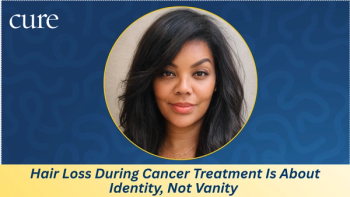
Lauren Yerkes, founder of POST SWIM, discusses the jarring shift to breast cancer survivorship and the daily practice of reclaiming body confidence.
For many facing breast cancer, the conclusion of active treatment is billed as a finish line. The bells are rung, the appointments thin out, and the world expects a seamless "return to normal." But for Lauren Yerkes, a survivor of triple-negative breast cancer diagnosed at 37, the end of treatment wasn't a return to her old self — rather, it was the beginning of an entirely different, often silent, chapter.
In a recent conversation with CURE, Yerkes, who is also the founder of the swimwear brand POST SWIM, opened up about the complexities of the "after" and why the transition into survivorship can be as jarring as the diagnosis itself.
“The after is this feeling where you don’t really know what just happened to your body,” Yerkes said. “You’re in shock. You think you’re supposed to go back to the ‘old you’ and what life was like before cancer. That’s what you hope for. And then you realize you’ve changed — not only physically, but your interests, your mental state. Everything has shifted.”
Yerkes described this period not as a recovery, but as a navigation of a "new normal." For many survivors, the mirror becomes a source of friction rather than reflection. The body that was once familiar now carries the permanent map of surgery and treatment, whether through scars, asymmetry or flat closures.
While the physical changes are visible, Yerkes notes that the most significant hurdle she faced was the psychological weight of acceptance. Even four years post-diagnosis, she admits that feeling secure in her own skin is a daily practice.
“It’s a mental game of feeling safe in my body,” she explained. “I’m still learning to feel comfortable in it. It’s a constant back-and-forth with your mind, trying to feel physically confident while mentally seeking that sense of safety.”
This lack of "body safety" often manifests in the most mundane moments, such as getting dressed. For Yerkes, the simple act of choosing a swimsuit became a symbol of this struggle. Navigating prostheses or surgical scars in garments designed for "standard" bodies can make a survivor feel like an afterthought in the fashion world.
It was this specific challenge — the intersection of practical need and emotional vulnerability — that led Yerkes to found POST SWIM. However, her message to the CURE community transcends commerce. It is about acknowledging that the "after" requires its own unique set of tools and a heavy dose of self-compassion.
As the conversation around breast cancer continues to evolve, voices like Yerkes’ remind us that the end of chemotherapy is not the end of the journey. Survivorship is an active process of rebuilding — not just a wardrobe, but a sense of self. For those currently in the "after," Yerkes’ story is a powerful reminder: you are not just surviving; you are learning to inhabit a new, resilient version of yourself.
You've mentioned that while diagnosis and treatment are heavily discussed, there's far less guidance regarding what you call “the after.” How would you describe that specific period of survivorship, and what was the most unexpected hurdle that you faced once your active treatment ended?
The after is like this feeling where, first of all, you're in shock because you don't know what just happened to your body. And second, you're trying to navigate this new life. So, it's kind of like you think you're supposed to go back to the old you and what life was like before cancer and treatment and all of that. And that's what you hope for. And then you realize you've changed — not only physically, but your interests; mentally, you've changed. Everything about you has really shifted. And so, the after becomes this new normal that you're trying to navigate. For me, it became hard to recognize my body that I had once known, and now I had a new body that I wasn't used to. And so that becomes the after, and kind of the experience that I hear from a lot of women.
The most unexpected hurdle for me after treatment was really just the acceptance of what had happened and the acceptance that this was now my new normal. I was so hopeful to go back to the old me, but I had to relearn who I was and what my priorities were. So, it was not only just a physical appearance that I had to get used to, but it was also a mental game of feeling safe in my body, which — I'm four years out from my diagnosis — and I'm still learning to feel safe and comfortable in it. So, it's this constant back-and-forth with your mind in terms of physically feeling confident again, mentally feeling safe and comfortable, and knowing that you have to keep moving forward. It's a whole-body experience.
Transcript has been edited for clarity and conciseness.
For more news on cancer updates, research and education,