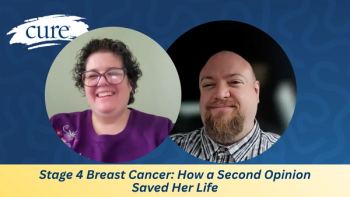
Diagnosed with stage 4 breast cancer weeks after giving birth, Eileen Carter explains why getting a second opinion changed the course of her care.
After breast cancer at 30, Aisha shares her journey through motherhood, a double mastectomy, body image struggles and the challenges of survivorship.
When Aisha Patterson was diagnosed with breast cancer in 2020 at age 30, she was a new mother of four who initially believed the lumps she felt while breastfeeding were clogged milk ducts. Five years cancer-free, she reflects on navigating treatment during the COVID-19 pandemic, adjusting to changes in her body after a double mastectomy and reconstruction, and rebuilding her life after cancer.
Aisha was breastfeeding her youngest child, who was just a few months old, when she first noticed a lump in her breast. Having breastfed all four of her children, she assumed it was a clogged milk duct that would eventually go away.
When the lump persisted and two more appeared, she began to question whether something else was happening. However, breast cancer was the last thing on her mind. She did not know many young women who had been diagnosed with the disease, and she continued to believe the lumps were likely cysts.
Aisha waited approximately four to six months before seeking medical attention. Part of the delay was financial: She was uninsured and worried about paying hundreds of dollars for tests she believed would ultimately show nothing was wrong.
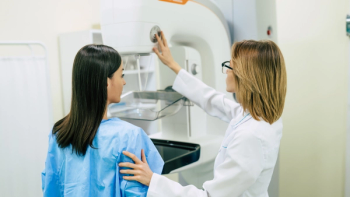
A friend eventually encouraged her to get the lumps checked. After visiting her primary care physician, Aisha was referred to a breast center, where she underwent a mammogram, ultrasound and biopsy.
Her experience highlights how financial barriers, assumptions about breast cancer risk and uncertainty about symptoms can delay medical evaluation, particularly for younger women who may not expect to face the disease.
For Aisha, one of the most difficult parts of treatment was missing moments with her children. She described herself as a highly involved mother who rarely missed her children's basketball games, practices or other activities.
Cancer changed that routine. Instead of cheering from the stands, she sometimes had to watch games through FaceTime while her husband attended with the children because she was too sick to leave bed.
Her diagnosis also came during the COVID-19 pandemic, when protecting herself from infection was especially important while undergoing chemotherapy. Because treatment left her immunocompromised, even a common illness in the household could mean isolating from her children.
Aisha recalled that after her first chemotherapy treatment, her youngest child became sick. She quarantined away from her family for approximately two weeks around Christmas.
On Christmas Eve, she spoke with her oncologist, who told her it should be safe to see her children again. Being reunited with them was a blessing, she said, but spending the holiday separated from her family was devastating.
Surgical recovery brought additional challenges. After surgery, she was unable to lift her children for approximately eight weeks, including her one-year-old and three-year-old, who frequently wanted to be held by their mother.
Missing these everyday moments affected her emotionally and contributed to feelings of guilt that stayed with her long after treatment.
Aisha said undergoing a double mastectomy with reconstruction profoundly affected her relationship with her body, sense of identity and self-worth.
Cancer treatment had already brought significant physical changes, including hair and eyebrow loss and physical frailty. Losing her breasts added another layer of adjustment that she felt she had not been adequately prepared for.
She described the experience as a form of amputation that is not always acknowledged in conversations about breast surgery.
After surgery, there were times when she struggled to look at herself in the mirror. Seeing the physical changes left behind by the procedure was painful, and accepting her new appearance became a difficult part of recovery.
Aisha credited her husband's love, patience and acceptance with helping her navigate those feelings. Even five years after her diagnosis, however, she said she continued to struggle with aspects of her body image.
Her experience illustrates that reconstruction does not necessarily resolve the emotional effects of mastectomy. For some survivors, adapting to physical changes and rebuilding their sense of self can continue well beyond active treatment.
Although completing treatment is often viewed as the end of the cancer journey, Aisha said survivorship felt more like the beginning of another difficult chapter.
During approximately a year of treatment, she moved from one medical intervention to the next, including chemotherapy, surgery, radiation and immunotherapy. She described that period as an experience in which people were continually checking on her and helping her through each stage.
When treatment ended, that structure changed. Aisha realized that her life, body and relationships with others no longer felt the same.
She struggled to relate to people as she had before her diagnosis and knew she could not simply return to her old life. At the same time, she was unsure what her new life would look like.
The transition became an identity crisis. She experienced anxiety, depression and post-traumatic stress disorder (PTSD), including anxiety attacks when returning to the cancer center.
Even though she was grateful to be alive, she said everyday responsibilities, including getting out of bed and caring for her children, sometimes felt overwhelming.
Recovery required time, therapy and intentional effort. Rather than expecting herself to return immediately to her previous life, she gradually worked toward a new sense of normalcy.
Five years cancer-free, Aisha said she finally felt that she had reached a place where she was more settled in her life and comfortable with how she was living.
Her experience underscores that finishing cancer treatment does not automatically mean the emotional effects of cancer disappear. Survivorship can involve its own challenges as people adjust to changes in their health, relationships, identity and daily routines.
Aisha also emphasized the challenges that younger women, particularly young Black women, may face when navigating cancer care.
She recalled experiences in which she felt ignored and had to advocate for herself to get answers, appropriate care and the support she needed.
For her, navigating breast cancer meant dealing with more than the disease itself. She also faced financial concerns associated with being young and uninsured, along with the stress of having to push for answers while coping with a life-changing diagnosis.
Aisha said these additional pressures can make an already difficult experience even more complicated.
Her perspective highlights the importance of listening to patients, taking their concerns seriously and ensuring they can access the information and care they need. For young women who may not expect to receive a breast cancer diagnosis, feeling heard and supported can be particularly important as they navigate an unfamiliar health care system.
Looking back on her experience, Aisha encouraged newly diagnosed patients to give themselves permission to ask for help rather than feeling they must handle everything independently.
“It's okay to take the cape off,” she said, emphasizing that patients can lean on others, ask questions, say no and establish boundaries during treatment.
She also encouraged patients to find their voices and communicate what they need throughout the process. Although the experience will not be easy, she offered reassurance that it is possible to move through it and reach the other side.
For survivors who are struggling emotionally after treatment, Aisha stressed the importance of patience.
Rebuilding a life after cancer takes time, and survivors should not feel pressured to recover emotionally on a predetermined schedule.
“Step by step, brick by brick,” she said, encouraging survivors to keep moving forward even when progress feels slow.
Five years after her diagnosis, Aisha's journey reflects the many layers of breast cancer survivorship, from the physical changes of treatment to the emotional work of rediscovering oneself. Her message to other women is that accepting help, setting boundaries and allowing time to heal can be important parts of finding a new path forward.
For more news on cancer updates, research and education,