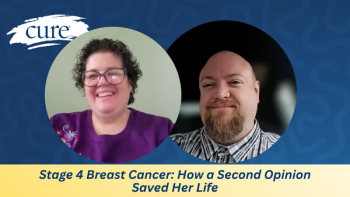
Diagnosed with stage 4 breast cancer weeks after giving birth, Eileen Carter explains why getting a second opinion changed the course of her care.
Dr. Sue Hwang, a radiation oncologist and breast cancer survivor, sheds light on the reality of cancer survivorship.
Dr. Sue Hwang is incredibly familiar with the misconceptions that come during a period of cancer survivorship.
Hwang, a radiation oncologist specializing in breast cancer, is the section leader of breast radiation oncology at the AdventHealth Cancer Institute in Orlando, Florida, and is an associate professor in radiation oncology at the University of Central Florida College of Medicine. She is also a breast cancer survivor.
The author of the new book, “From Both Sides of the Curtain: Lessons and Reflections From an Oncologist’s Breast Cancer Journey,” Hwang sat down for an interview with CURE to shed light on the reality of breast cancer survivorship.
What are some common misconceptions related to cancer survivorship you would like to dispel?
I think people think that once you get through definitive treatment — and for breast cancer, I define it as surgery, chemo, radiation; and then, because 80% of breast cancer patients are hormone receptor-positive, a large percentage of the patients are going to be on maintenance treatment. And when people are going through definitive treatment, that's when everyone has their support, because they see you getting knocked down. The chemo knocks you down. You get tired from the radiation. You're recovering from surgery. There are physical changes that you get from the definitive treatment.
And then when you went to the maintenance space and you ring that bell, everyone's kind of like, “OK, you're done,” and then your support fades away. And then, because you look good — and here's the thing, with breast cancer treatments, we do a really good job of making our patients look good, but mentally you're just in a different space.
And I think what I want more people to realize about survivorship is it doesn't end when that bell rings for the patient. If anything, I actually think the survivorship journey, probably for me personally, has been the more challenging aspect of getting diagnosed with cancer, because that's when you really have to deal with, “OK, what happens now?”
When you're under treatment, you see your doctors every day. You're under really good watch, you're getting treatment. You feel like you're doing something proactive to protect yourself against the cancer. And then when you go into survivorship, and you just kind of go on maintenance, and you don't see your doctors as much, and then every little pain that you get, it's really hard to think that's not something.
Transcript has been edited for clarity and conciseness.
For more news on cancer updates, research and education, don’t forget to