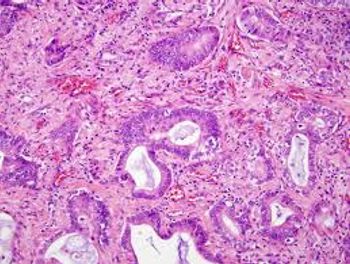
Patients with a newly identified tumor state had shorter survival following chemotherapy and immunotherapy, potentially helping doctors identify those at greater risk of poor outcomes.
Heather Quintana Suchan, a nonsmoker with stage 4 lung cancer, credits genomic testing and Rybrevant and urges others not to ignore mild symptoms.
Heather Quintana Suchan, a mother and music industry professional living with stage 4 lung cancer, shared how her diagnosis challenged common assumptions about who develops the disease and underscored the importance of biomarker testing, in an interview with CURE.
A lifelong nonsmoker, she once believed lung cancer was largely lifestyle-based. Her only symptom was a persistent cough she brushed off as a cold until testing revealed advanced disease. At City of Hope, genomic profiling identified a specific mutation, allowing her to start targeted therapy with Rybrevant (amivantamab-vmjw). She continues working and staying active, encouraging others not to ignore subtle symptoms and to seek personalized testing so treatment decisions fit their lives.
Heather Quintana Suchan: When I was first diagnosed with lung cancer, I couldn’t believe it. There’s a big perception out there that this is a lifestyle-based disease and that someone must have done something to get it. And that is so not true. I was never a smoker, very healthy and active with my family, so I felt like there was a stigma about how people get lung cancer.
I know the million-dollar question is how nonsmokers are getting lung cancer, and I believe we’re getting closer to understanding how these gene mutations happen. But that was a big misconception for me, that it was lifestyle-based.
When I found out not only did I have lung cancer but stage 4 lung cancer, I was surprised because I wasn’t that sick. I’m a mother with kids and I had a cough all the time because I’m around them, so having a persistent cough wasn’t really setting off alarm bells. It just showed me that cancer can creep in and be there quietly. It’s really important to get checked, even if your symptoms seem mild, because mine weren’t that extreme.
I’ve worked in the music industry for 15 years and it’s something I’m very proud of. I work in the merchandise space, which has been such a growing division, and I’ve had a lot of accomplishments there.
People know me in that space, and I’ve found there are a lot of charitable people in the music industry, people involved in cancer philanthropy and that world. So when I found out I was sick, I started calling around and saying, “Hey, I need a support system here. I was just diagnosed with cancer, and I know you’re familiar with the cancer facilities around.”
Doing that research with people in my community really helped my journey. They supported me hugely. I worked the entire time I’ve been sick. Someone with stage 4 lung cancer didn’t quit their job and kept going. Because I enjoy my work and I’m proud of what I do, it’s been a bright spot for me. I could focus on making T-shirts rather than worrying about how sick I might feel.
I’ve tried to keep life regular and take it a day at a time. The music industry really supported me through all of that. And honestly, I want people to know you can still live a very full life. I still go to concerts, baseball games and football games. I don’t let cancer define me.
I remember going to City of Hope and not knowing anything, then being told that I did have cancer and it was stage 4. I thought that meant getting your affairs in order. My mother and my husband were there, and we all looked at each other like, how could that be true?
But the hospital and the staff were so reassuring. They said, “We’ve got you. We can melt this away with medication.” They told me I would do chemotherapy, but there was also something called Rybrevant that had just recently been FDA approved about five weeks before I got there. They said it was a targeted therapy that would find my cancer wherever it had spread.
They explained it was a smart drug, a monoclonal antibody. I had never heard of that before. I went from feeling like stage 4 meant I was a goner to hearing that we could get this under control and get me to a stable place.
I trusted my team, signed off on my treatment plan that day and never looked back. I never Googled anything. I just went with my doctors. Having that trust, and a medication that’s been life-changing for me, is why I’m doing so well today.
It’s so important to know your biomarkers and do the genetic testing. This cancer is not one size fits all. Even within exon 20, which is the mutation I have, there are variations. Until you do that testing, you can’t know what the best course of action will be for you.
In my case, I know my body responds very well to Rybrevant and my side effects are minimal. But someone else might have a different story. The point is, you can’t know that unless you test.
On that first day at City of Hope, it felt like they unlocked the magic by going through my genetic report and making a recommendation specific to me. Everyone is an individual. It’s a journey, and there may be curves along the way, but you can still live a healthy, full life. I plan to live to be an old lady, so let’s keep going.
I definitely powered through what I thought was a cold for much longer than I should have. For about six months, I had an intermittent cough that wouldn’t go away, but that’s not uncommon when you live with small children.
I also noticed my computer monitor looked strange and thought maybe the fluorescent lights were bothering me. Looking back, those were early symptoms. I went to work every day and kept going when I probably should have investigated further.
Eventually, my cough became more like pneumonia and I went to urgent care. That’s what started this whole journey. Don’t ignore symptoms, even if they seem small. Early detection really matters. Listen to your body.
My husband became my caregiver when I was really going through the thick of treatment, and he often felt like he couldn’t ever be sick or take time for himself. As a patient, I actually wanted him to go out and do things. I’d say, “I’m fine, I’m just resting, please go do something for yourself.”
I think it’s important for caregivers to have a life and take care of themselves too. Seeing him do something nice for himself actually made me feel better.
First, ask yourself, do I trust my care team? That’s very personal, but you’ll feel it.
Second, do I feel like a priority here? It’s easy to feel rushed or lumped in with everyone else, but you want to feel personally cared for and heard.
Third, can I fit this treatment into my life as it is? Treatment can feel overwhelming, but taking it a day at a time helps. If you trust your team and feel comfortable with them, that makes all the difference.
Transcript has been edited for clarity and conciseness.
For more news on cancer updates, research and education, don’t forget to