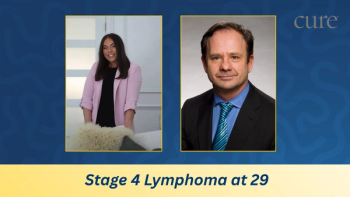
She was diagnosed with stage 4 primary mediastinal B-cell lymphoma (PMBCL), a type of non-Hodgkin lymphoma that starts in the center of the chest, at 29.
ctDNA testing could help doctors track response, reduce unnecessary chemo, and identify relapse early for patients with aggressive B cell lymphomas.
Dr. Hua-Jay Cherng, a hematologist oncologist at NewYork-Presbyterian/Columbia University Medical Center, discussed how ctDNA testing is changing how doctors monitor treatment response in patients with aggressive B cell lymphomas.
Currently, ctDNA hasn’t dramatically changed care, but it offers promise. PET scans have limits — about 20% of patients in complete remission from diffuse large B cell lymphoma (DLBCL) still relapse, and positive PET results can reflect inflammation or infection rather than cancer. MRD testing could supplement imaging, reduce biopsies, and guide treatment decisions. Commercial MRD assays are available in 2026, though wider use depends on trials and guidelines.
Frontline DLBCL treatment has been largely unchanged for decades, usually six cycles of chemotherapy with immunotherapy. MRD could identify patients with an early, strong response who might safely receive fewer cycles, reducing side effects. It could also flag patients at risk of relapse earlier, allowing timely additional therapies and reserving intensive treatment for those who need it most.
Cherng highlighted the importance of clinical trials in determining how MRD and ctDNA testing can best improve outcomes for patients with aggressive B cell lymphomas.
So for patients with aggressive B cell lymphomas, how is ctDNA testing changing the way doctors monitor response to treatment compared with traditional PET scans, and what are the importance of clinical trials?
I would say that, as a whole, it probably hasn't led to too many changes yet. Some of this is aspirational, which is why I described the hope. PET scans are imperfect right now. We know that for patients in complete remission at the end of treatment for DLBCL, about 20% will end up relapsing. At the same time, a positive PET scan is nonspecific — it can be due to treatment-related inflammation or infection and doesn’t necessarily mean the patient has residual lymphoma.
The hope is that using more sensitive and specific tools like MRD will help supplement or even replace conventional imaging in some cases. It might reduce the need for confirmatory biopsies and potentially help guide treatment decisions, as I alluded to earlier. We’re on the cusp of realizing this, but more clinical trials and guidelines are needed before we can say this is a standard part of response assessment. That said, commercial assays are already available for clinicians to use in 2026, so some of this is just playing a bit of catch-up — we have the tools now, and we need to figure out how to use them.
The bane of my existence is knowing that we’ve been treating newly diagnosed diffuse large B cell lymphoma pretty much the same way since the 1970s: combination chemotherapy, now with added immunotherapy, usually for six cycles regardless of the patient or how they’re responding. But we know that not every patient needs all six cycles. About two-thirds of patients are cured with frontline chemo, and anecdotally, some patients who stop treatment early due to toxicity do just fine.
So one use case is de-escalating treatment to reduce toxicity. My goal is to use MRD to identify patients who have an early, excellent molecular response, demonstrating sensitivity to chemotherapy. These patients might already be cured and don’t need all six cycles, allowing them to recover and return to their lives sooner.
Unfortunately, about one-third of patients will have refractory disease or relapse after frontline treatment. MRD could help identify these patients early instead of waiting for relapse. We could add novel therapies or consolidation treatments right after initial chemotherapy, aiming to cure more patients while reducing the need for future treatment. This approach targets the additional therapy to those who truly need it, rather than treating everyone, which I find much more palatable. It allows us to reserve the more aggressive treatment for patients who need it most.
Transcript has been edited for clarity and conciseness.
For more news on cancer updates, research and education,