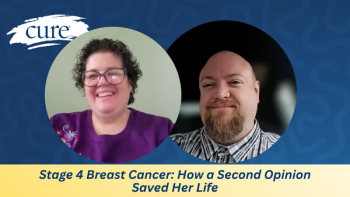
Diagnosed with stage 4 breast cancer weeks after giving birth, Eileen Carter explains why getting a second opinion changed the course of her care.
Dietitian Stephanie Meyers shared practical strategies at the LiveLung SCLC Patient Summit to help patients manage appetite loss and digestive issues.
Side effects from treatment can make eating difficult for patients with small cell lung cancer, but practical strategies may help improve nutrition and comfort, according to registered dietician and nutritionist Stephanie Meyers of Iris Oncology, who presented at the LiveLung SCLC Patient Summit.
Meyers explained that treatments commonly lead to eating-related challenges such as loss of taste and appetite, leaving patients uninterested in food even when it is in front of them. Digestive issues can also play a role, with some patients experiencing difficulty with bowel movements or a general sense that their digestive system feels off. Together, these side effects can reduce both the desire to eat and comfort after meals.
However, Meyers emphasized that working with an oncology-specialized dietitian can help address these challenges. She noted that smaller, more frequent meals may be easier to manage than larger portions. Patients may also benefit from adding nutritional supplements in small amounts after meals to support intake.
She also highlighted ways to increase calorie intake without significantly changing how food tastes. For example, adding avocado oil — which is largely tasteless — can boost the number of calories in each bite.
For patients dealing with digestive issues, Meyers said that certain foods may be more helpful, while others are best avoided depending on symptoms such as constipation or frequent bowel movements.
Overall, she underscored the importance of individualized nutrition planning, noting that tailoring an eating approach to specific side effects can play an important role in treatment and recovery.
When eating becomes difficult for patients with small cell lung cancer, what are the most common barriers you see in real life, and how can patients start to overcome them?
I think there are a couple of things to consider. Oftentimes, the treatments that are so effective for small cell lung cancer can cause a lot of eating-specific challenges, like no taste or no appetite. You get a plate of food in front of you, you look at it, and you're just completely disinterested.
I would say there are also challenges on the digestive end of things. Even if patients manage to eat something, they might have trouble moving their bowels. Their digestive system might feel off. So there are lots of different side effects that can really cause people to be less interested in food and also to feel less comfortable even after they eat.
The good news is that if you're working with an oncology-specialized dietitian, there are a lot of things we can do to make some of those side effects less impactful. You can eat smaller, more frequent meals. You can add nutritional supplements in small quantities right after a meal. You can learn how to fortify calories in food.
So, avocado oil is a really good example of something that is very tasteless but can be easily added to foods to enhance how many calories are in each bite a person might take.
Similarly, there are also things we can do if people are experiencing trouble moving their bowels or having too frequent bowel movements. There are foods that are best to avoid in those situations and foods that are really helpful.
So again, working with a dietitian to individually tailor an eating plan to help with the side effects you're facing can be a really important part of overall treatment and recovery.
Transcript has been edited for clarity and conciseness.
For more news on cancer updates, research and education,