Deborah A. McDowell of OAW explains how patients can prepare for hair loss before chemotherapy starts.

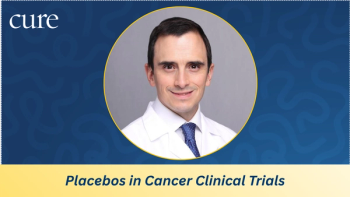
Dr. Suneel Kamath discusses the importance of biomarker-driven approaches in cancer care following the 2026 ASCO GI Symposium.
Dr. Suneel Kamath, a gastrointestinal medical oncologist at Cleveland Clinic in Ohio and an assistant professor of medicine at the Cleveland Clinic Lerner College of Medicine of Case Western Reserve University, sat down for an interview with CURE following the
During the interview, he discussed the importance of biomarker-driven approaches in cancer care, emerging targeted therapies and the need to expand molecular testing to better personalize treatment for patients with advanced disease.
What should patients take away from the 2026 ASCO Gastrointestinal Cancers Symposium?
Similar to the phase 3 HERIZON-GEA-01 trial, what’s really the overall theme of these is that we have to identify specific biomarkers for as many people as we can, because when we identify a specific biomarker driving a cancer, we know that the efficacy of the drugs we use to treat that target will be much greater.
Often on the flip side, we can have a much better side effect profile compared with an untargeted treatment like chemotherapy or even some of the more aggressive immunotherapies. We generally think of those as a big advance, but some of those actually can be quite toxic because they aren’t as targeted in certain settings. Having a targeted, biomarker-driven approach can really improve both outcomes and tolerability. It’s upon us to try to push that envelope, identify more biomarkers, so that we can cut down the number of people for whom we only have untargeted therapies.
Another one that’s on the horizon, we’ve known about the KRAS gene for a long time as a really important driver mutation in a number of cancers, the most important being pancreatic. Over 90% of pancreatic cancers have KRAS mutations. But only recently have we been able to develop drugs that can actually target that. That’s truly exciting. It’s not a rare biomarker. If we had an effective drug for this gene, that would be an effective therapy for more than 90% of people with pancreatic cancer, and that would truly be an advance. With more time, the hope is that we start to identify more targets so that we can personalize treatments for every individual patient and every individual tumor, rather than relying on untargeted regimens.
This also emphasizes the importance of doing that testing. It’s still something that we lag behind in, in a big way, especially when it comes to getting results on every patient with advanced disease. We have to do it in everyone. We may think we’re doing a great job, but as physicians, we really need to work on that. Patients can also be strong advocates for this. There have certainly been situations where people came in and asked whether a specific test had been done, and it turned out it hadn’t.
Originally, there was an assumption that there wasn’t enough tissue or that there was some reason it couldn’t be done, and it turned out that there was. People asking about it has helped lead to that testing being completed. Patients are encouraged to be their own advocates and help remind clinicians to do the things they’re supposed to be doing, too.
Transcript has been edited for clarity and conciseness.
For more news on cancer updates, research and education,