

Experts highlight key themes from the ASCO GI Cancers Symposium, including the growing role of AI and an increased emphasis on patient-centered decision-making.
Experts highlight key themes from the ASCO GI Cancers Symposium, including the growing role of AI and an increased emphasis on patient-centered decision-making.

Patient education and individualized navigation can improve genomic testing uptake and downstream participation in genomics-based clinical trials.

Dr. Nicholas Hornstein explained the concept of ctDNA and how this blood test may help guide treatment decisions, including whether additional therapy is needed.
Dr. William A. Hall sat down with CURE to discuss the impact of technologies like artificial intelligence on gastrointestinal cancer care.

Patients with advanced gastric cancer received PD-1 inhibitors at similar rates across racial groups, although overall use remained limited in real-world care.
Dr. Elena Elimova discussed data showing 21-month progression-free survival with Ziihera, Tevimbra and chemotherapy for some patients.

Nutritional support helps malnourished patients with advanced gastric cancer maintain chemotherapy and may extend time to treatment failure.
Dr. Nadine A. Jackson explains how relatively simple interventions may help close gaps in access to genomics-driven trials across gastrointestinal cancers.

In BREAKWATER, EC plus FOLFIRI achieved a 64.4% response rate and showed a trend toward improved overall survival in patients with BRAF V600E mCRC.
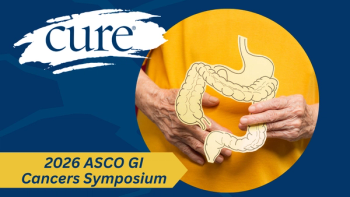
Physical activity, especially walking, was linked to less fatigue and better quality of life for patients with colorectal cancer, particularly in early survivorship.
Dr. Thejus Jayakrishnan discussed how patients and physicians weigh treatment options in later-line metastatic colorectal cancer.
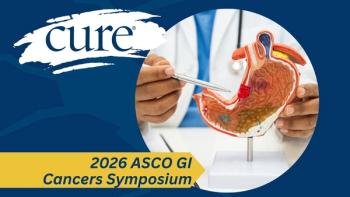
ECOG performance status was found to capture only part of the patient experience in gastric/GEJ adenocarcinoma.
Dr. Elena Elimova discusses how Ziihera-based therapy may change treatment for HER2+ locally advanced or metastatic gastroesophageal adenocarcinoma.

Dr. William A. Hall discusses overtreatment in gastrointestinal cancer care and how AI-driven response assessment is shaping personalized treatment.

FDA grants orphan drug designation to HLX22 for gastric cancer, with a phase 2 trial showing improved progression-free survival and objective response.

Dr. Nataliya Uboha explained the benefit of treatment with Krazati combined with Erbitux in KRAS G12C–mutant metastatic colorectal cancer.

In patients with residual disease after curative resection of colorectal cancer, Lonsurf showed a numerical improvement in DFS, though not significant.

Pelareorep plus chemotherapy with or without Tecentriq had an acceptable safety profile in patients with newly diagnosed metastatic pancreatic ductal adenocarcinoma.

Patients with BRAF V600E-mutated metastatic colorectal cancer experienced improved responses when treated with Braftovi plus Erbitux and mFOLFOX6.

Findings presented at the Gastrointestinal Cancers Symposium showed the efficacy of Krazati and Erbitux for some patients with unresectable or metastatic colorectal cancer.

Palliative care for young adults with colorectal cancer reduced invasive procedures, costs and increased DNR orders.
In resectable, locally advanced esophageal squamous cell carcinoma, neoadjuvant Tyvyt plus chemoradiotherapy led to an improvement in response rates.

Frontline treatment with Tevimbra plus irinotecan, paclitaxel, oxaliplatin and 5-FU/leucovorin had promising efficacy and manageable safety in gastric/GEJ cancer.

Dr. Filippo Pietrantonio discusses OrigAMI-1 trial data which assessed Rybrevant in mutated, wild-type, non-HER2-amplified metastatic colorectal cancer.

Early and late responders with esophageal squamous cell carcinoma experienced comparable OS benefits with Tevimbra plus chemo in the RATIONALE-306 trial.

In the INNOVATION trial, adding Herceptin and Perjeta to chemotherapy increased toxicity in patients with HER2-positive gastric cancers.
The combination of Opdivo and Yervoy is supported by updated results as a standard of care for MSI-H or dMMR metastatic colorectal cancer.
End-of-life palliative care consultations may also ease financial strain for patients with esophageal cancer.

Among those with advanced gastric cancer, oral Liporaxel showed superior overall survival outcomes versus IV Liporaxel as a second-line therapy.
Synchronous metastases did not affect survival in resected BRAF V600E-mutated metastatic colorectal cancer.