Patients with colorectal cancer who walked more had less fatigue and better quality of life, regardless of how active they were at diagnosis.
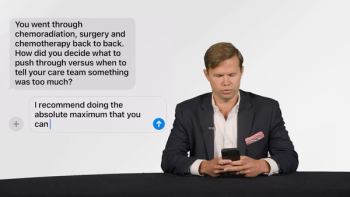
Dr. Nicholas Hornstein explained the concept of ctDNA and how this blood test may help guide treatment decisions, including whether additional therapy is needed.
Circulating tumor DNA (ctDNA) is a blood test that looks for tiny pieces of cancer DNA released by dying cells, allowing doctors to detect cancer using a simple blood sample, Dr. Nicholas Hornstein explained in a live interview with CURE at the
During the interview, he explained the concept of ctDNA, and how this simple blood test can help patients avoid additional therapy for their cancer.
Hornstein is a physician scientist in the department of Hematology and Oncology at Northwell Health, as well as an assistant professor, the Donald and Barbara Zucker School of Medicine at Hofstra/Northwell.
What is circulating tumor DNA, or ctDNA, and how can a blood test after surgery help predict the risk of rectal cancer coming back? For patients whose ctDNA is negative after surgery, what do these results suggest about whether adjuvant chemotherapy is truly necessary?
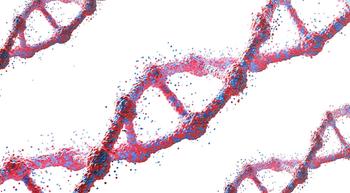
You know, it sounds like a really confusing concept — ctDNA is a mouthful — but at the end of the day, there are just a few things you need to know. Every day, our cells live and die in our body, and when they die, they release their DNA into our bloodstream. It turns out, through some really cool technology, we can tell cancer DNA apart from normal DNA. And if I take a sample of blood, and potentially a sample of your tumor, in some cases I can track down those tiny snippets of cancer DNA.
As you might guess, if cancer DNA is present in your bloodstream after a curative, intense surgery, there is a pretty high chance your cancer is going to come back, whereas, as we are finding out, if that test is negative, that likelihood is much, much lower.
This is a really exciting [concept] in colorectal cancer especially, but also in many other tumors, and we are really finding out more about this new technology and how best to use it in medical oncology. There are some cases now, especially where the technology is more advanced and more studied, like in colorectal cancer, where we are starting to think about de-escalating, meaning giving less, or even no chemotherapy at all. So, in my practice, I am using this for patients after they are cured of intense surgeries to help me decide if chemotherapy is the right choice for the right patient.
Transcript has been edited for clarity and conciseness.
For more news on cancer updates, research and education,