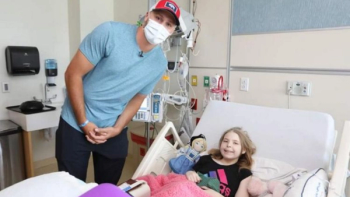
Hannah was 11 when she was diagnosed with acute lymphoblastic leukemia (ALL). Four years, two relapses and a 53-day hospital stay later, she is back in school.
Dr. Jonathan W. Friedberg says long-term data show 42% of treated follicular lymphoma patients achieved functional cure with chemoimmunotherapy.
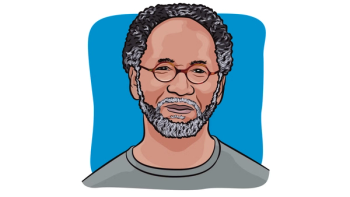
Fifteen-year follow-up from the S0016 trial suggests that some patients with advanced-stage follicular lymphoma may be cured with standard chemoimmunotherapy, according to Dr. Jonathan W. Friedberg, director of the Wilmot Cancer Institute at the University of Rochester Medical Center.
The findings challenge the long-held belief that advanced-stage follicular lymphoma is always incurable. Friedberg noted that for patients with high tumor burden who require treatment, chemotherapy combined with an antibody remains a recommended approach outside of clinical trials. Importantly, the results suggest that more than one-third of patients who receive this therapy may never need treatment again.
Researchers also observed that relapse rates dropped significantly over time, falling from 6.8% in the first five years to 0.6% between years 15 and 20. Friedberg said that by about 10 years after treatment, the risk of progression becomes very low, which in some cases may allow long-term survivors to transition follow-up care from oncology to primary care.
Friedberg: This was really a remarkable finding for us. This was a clinical trial that started in 2001, and we now have a median follow-up of more than 15 years. Through elaborate cure-modeling analysis, we demonstrated that with standard treatment that we still use today, over a third of patients are cured with that standard treatment. That means no evidence of disease progression, and the patients are alive more than 15 years after initiating treatment.
Our treatments are evolving and continuing to evolve, but for patients with advanced-stage follicular lymphoma that has high tumor burden, in other words that needs treatment, chemotherapy with an antibody remains the recommended treatment outside of a clinical trial, and our results certainly support that. What that also means is that over a third of those patients who get that treatment will never need treatment again, which is a very different paradigm from what I grew up with in training in this disease, where we used to say that patients would need treatment again and again.
I should say that the chemotherapy regimen that was studied in this trial is called R-CHOP. That is still used, but other chemotherapy regimens, such as bendamustine and rituximab, are also used. We do not know the degree to which those chemotherapy regimens will result in cure. However, we are optimistic that our findings are going to be generalizable.
Relapse rates dropped from 6.8% in the first five years to 0.6% between years 15 and 20. What does this decline over time suggest about the long-term disease course after CHOP-based chemoimmunotherapy?
Yeah, I think that was an important observation that we made. There is still a risk of disease progression in follicular lymphoma many years after initial treatment, but by the time you get to between 10 and 15 years after initial treatment, the rate of progression is very, very low. In my practice, this means that patients no longer need to be seen in the cancer center when they reach a certain time point, say after 10 years, and they can be followed by their primary care physician. I think that liberation of patients from the cancer center and declaring them cured so they can get on with their lives may have potentially significant psychological benefit.
The original trial was designed, as you said, to compare two different regimens: CHOP with either rituximab or CHOP with a drug called iodine-131 tositumomab, which is radioimmunotherapy. We really do not use radioimmunotherapy anymore, so to some degree that is a historic question. I think most of the attention should be on the concept that CHOP therapy with an antibody can result in cure. We saw that with the R-CHOP–treated patients, which we still use.
In follicular lymphoma now, one of the most exciting classes of drugs is another type of antibody called a bispecific antibody. We are very excited to learn whether we will see even better results when either combining a bispecific antibody with chemotherapy or substituting a bispecific antibody for chemotherapy. Our results really emphasize the importance of long-term follow-up to determine whether that is true.
It is important, when you read literature in follicular lymphoma, to understand that many patients who are diagnosed with follicular lymphoma are older at the time of diagnosis. If you look at population studies, the median age is somewhere around 65. So if you are a 65- or 70-year-old and you are diagnosed with follicular lymphoma, 15 years later you might be 85.
Unfortunately, many patients in that age range may die of other causes. When you see a survival curve, you have to appreciate that some of those events are related to lymphoma and some are related to normal lifespan, heart disease, lung disease, other cancers or other problems.
Part of our analysis separated out the lymphoma-specific events compared with these other events. If you are a younger patient, I would say that your chances of living more than 15 years are higher than 70%, recognizing that that figure captures other causes as well. Again, our results demonstrate that after about 10 years, if you have received chemotherapy with an antibody as part of your upfront treatment, there is really no need to follow up with an oncologist unless new symptoms develop.
I think that is going to be a very important discussion for our lymphoma community over the next year or two. Historically, when the disease was felt to not be curable, it felt easier to try to substitute a new regimen because the old regimen was not curing the patient anyway and maybe the new one would. Now that we know that a substantial proportion of patients are cured, I think that raises the bar for moving to a new treatment.
Properly conducted randomized trials comparing new treatments with existing treatments are ultimately going to need to happen for them to become standard of care. Certainly in the context of a clinical trial, many patients should be treated with these new agents so we understand how they work. I have a clinical trial open at our site where we are using a bispecific antibody alone in the treatment of follicular lymphoma, but ultimately, if it is going to become a standard of care, we are going to need comparative data.
Transcript has been edited for clarity and conciseness.
For more news on cancer updates, research and education,