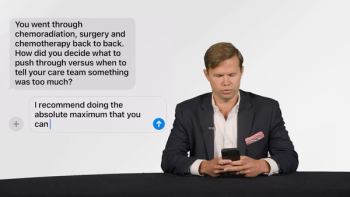
In the latest installment of CURE's "Text a Survivor" series, Brad Moore answers some of the most common questions people have about living with and beyond a colorectal cancer diagnosis.
Dr. Sandeep Kunwar explained that getting drugs into the brain is a major hurdle for glioblastoma, as the blood-brain barrier blocks most treatments.
Dr. Sandeep Kunwar, a neurosurgeon and professor at University of California, San Francisco and co-founder of Precision NeuroMed, discussed one of the most significant barriers when treating patients with glioblastoma: getting drugs into the brain.
According to Kunwar, the challenge is not limited to recurrent glioblastoma but applies broadly to diseases of the central nervous system. While researchers understand much about the biology of these conditions and have developed drugs that show strong results in animal models, translating those results to humans has often been limited by drug delivery.
A major obstacle is the blood-brain barrier, which Kunwar described as similar to “Saran Wrap” surrounding every blood vessel in the brain. This barrier evolved to protect the brain from foreign molecules, but it also prevents many treatments from reaching tumors.
Some small-molecule drugs, such as Temodar (temozolomide), can cross the barrier to a degree and have been approved for years. However, these drugs typically slow disease progression rather than stop it.
Kunwar explained that therapies with the greatest potential — including biologics like antibodies, gene therapies and cellular therapies — face an even greater delivery challenge. Only about 0.01% of these drugs reach the brain, making it difficult to achieve therapeutic levels in tumors while still protecting healthy brain tissue.
For patients with recurrent glioblastoma, what is the biggest challenge today when it comes to getting drugs into the brain?
This challenge applies not just to recurrent glioblastoma, but really to most diseases of the central nervous system. We understand a lot of the biology of these diseases and we’ve developed some remarkable drugs that cured animals. But the barrier between those results and treating humans has often been drug delivery. Glioblastoma also has additional hurdles compared with many other cancers.
The key issue is the blood-brain barrier. I think of it like Saran Wrap around every blood vessel in the brain. It’s the result of about 100 million years of evolution designed to keep foreign molecules out of the brain. That protection is important, but it also makes treatment difficult. Small molecules like Temodar (temozolomide) can cross the barrier somewhat and that drug has been FDA approved for many years. But small molecules tend to slow the disease rather than stop it.
The therapies with the greatest potential for long-term control are biologics — proteins such as antibodies, gene therapies or cellular therapies. The problem is that only about 0.01% of those drugs actually reach the brain. So we either affect the rest of the body or fail to get enough drug into the tumor to reach therapeutic levels. The challenge is delivering a sufficient concentration of drug into the brain while still protecting healthy brain tissue.
Transcript has been edited for clarity and conciseness.
For more news on cancer updates, research and education,