After her sister’s Hodgkin lymphoma diagnosis, remission and relapse, a caregiver reflects on follow-up care, guilt and finding hope between cancer battles.
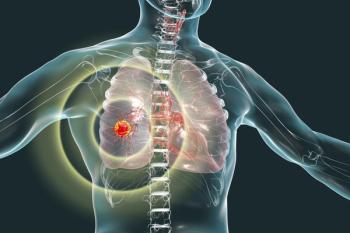
After reaching remission from stage 3B non-small cell lung cancer, one survivor shares the emotional journey of healing, hope and finding a new normal.
As I began making progress during treatment for stage 3B non-small cell lung cancer, my oncologist used a word I never expected to hear: "cure." He explained that the goal of my treatment was exactly that.
After the exhausting fight I had been through, it was difficult to believe him—both mentally and emotionally. The possibility of a cure seemed almost impossible to accept. Instead, the word that stayed with me throughout treatment was "normalcy." I wouldn't truly begin to experience that until nearly a year after I reached remission.
For more than 30 years, I had been a member of St. James Church. It is a beautiful church located in a neighborhood that has seen difficult times. Although the congregation is much smaller than it once was, the parish continues to serve its community with unwavering dedication.
By the time I was nearing the end of my immunotherapy treatments—the final phase of my lung cancer journey—I received an invitation to attend the church's 150th anniversary Mass and reception. Although I no longer lived nearby, returning felt like coming home.
After brunch, both clergy and lay leaders spoke about the church's future with remarkable confidence and faith. Despite financial challenges, they believed wholeheartedly that God would continue to provide for their mission of serving those most in need.
As I listened, I found myself asking a simple question:
If they could have such faith in the future of their church, why couldn't I have that same faith in my own future?
Some days I felt optimistic. Many more days, I did not.
My doctors told me my prognosis was very good, but emotionally I rode a constant roller coaster. Some days I believed I could beat this disease. Other days I felt overwhelmed by fear and exhaustion.
I had endured nearly two years of treatments. Even with encouraging news, I couldn't fully silence the question that lingered in the back of my mind:
Could I really survive this life-threatening disease?
By January 2, 2020, I had officially completed treatment for stage 3B non-small cell lung cancer. A few weeks earlier, I had finished immunotherapy. Now it was time for my first CT scan after treatment.
It felt like my final exam.
The anxiety was overwhelming.
I knew my body had endured everything treatment demanded. I knew I had done everything my doctors asked.
But what if one cancer cell had escaped?
What if it had already started growing somewhere else?
I prayed one simple prayer:
"Please, God. Let it not have been in vain."
My prayers were answered.
The scan showed no recurrence and no metastases.
I walked out of my oncologist's office feeling like I was on top of the world.
On the drive home, my husband and I stopped at Dunkin' to celebrate. As I ordered, I smiled at the employee and said,
"I used to have cancer. Now I'm in remission."
He smiled back and replied,
"Your muffins are free."
It was such a small act of kindness, but I'll never forget it.
Soon after reaching remission, I decided to have my port removed.
At the time, I believed that removing the device somehow symbolized leaving cancer behind. I wanted the treatment to be over. I wanted nothing connecting me to those long months of chemotherapy and immunotherapy.
Looking back, I know removing the port didn't protect me from recurrence.
But emotionally, it helped me begin closing one chapter and opening another.
Throughout treatment, one word stayed with me:
Normalcy.
I began seeing glimpses of it in early 2020.
Then the world changed.
The COVID-19 pandemic disrupted life for everyone. Just as I was beginning to recover emotionally, lockdowns, uncertainty and isolation became the new reality.
Not long afterward, my 94-year-old father passed away—only weeks after we had finally begun to understand one another in ways we never had before.
Normalcy disappeared once again.
Eventually, life slowly began to feel familiar again.
Late in 2020, there was hopeful news that older adults and people with chronic illnesses would soon become eligible for the first COVID-19 vaccine.
Having just turned 65, I found myself counting the days until I could receive my shot.
It may seem like a small thing now, but at the time it represented something much bigger.
It represented hope.
It represented safety.
And after everything cancer and the pandemic had taken away, it represented a return to something I had long been searching for:
Normalcy.
Today, when I think back on my journey with stage 3B non-small cell lung cancer, I remember the fear, the uncertainty and the endless waiting. But I also remember the faith I witnessed at my church, the relief of hearing the words "no evidence of disease," the kindness of a stranger who celebrated with free muffins and the slow, steady return of everyday life.
It wasn't the word "cure" that carried me through.
It was the hope that, one day, life would feel normal again. And eventually, it did.
For more news on cancer updates, research and education,