Emma Halligan found connection at a free New Jersey retreat for women with cancer, which held its annual walk and 5K on Oct. 17.
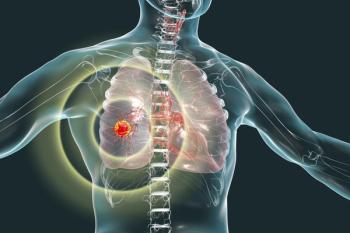
At Keck Medicine of USC, surgeons, oncologists and radiation specialists collaborate closely, ensuring individualized care for patients with lung cancer.
Dr. Graeme M. Rosenberg, a thoracic surgeon specializing in airway intervention and reconstruction, and Dr. Jorge J. Nieva, an associate professor of clinical medicine and medical oncologist, of Keck Medicine of USC, discussed how close collaboration shapes care for patients with lung cancer.
Rosenberg described regular multidisciplinary clinics and weekly tumor board meetings that allow surgeons, medical oncologists and radiation oncologists to review cases together and develop individualized plans. Nieva highlighted how advances in lung cancer treatment and surgery have made this teamwork even more important, as care decisions now depend on cancer subtype, stage and evolving surgical options, reinforcing the value of coordinated expertise within one center.
How important is it for oncologists and thoracic surgeons, as well as other specialties, to work cohesively when these types of diagnoses arise?
Rosendberg: I think that it’s absolutely essential, and it’s how we practice oncologic care. Here at USC, we have very open communication and a strong relationship between the surgical department, the medical oncology department and the radiation oncology department. In fact, oftentimes we do these type of visits, we call them multidisciplinary clinics, where all three of these service lines or specialists will be there together at the same time.
Additionally, we meet once a week and discuss almost all of our cases at our multidisciplinary tumor board, even if they’re simple and straightforward or if they’re complex and challenging decision making. The vast majority of our cases get discussed with people who meet once a week, every week, and come up with a reliable, individualized plan for the problem that we’re facing in front of us. So I couldn’t do my job without people like Dr. Nieva, without support like our PA team, our office coordinators and our patient care navigators. That’s what I think sets great oncologic care apart from good oncologic care: the relationships and the communication between experts with different experiences.
Nieva: Yeah, I would just add to that that there’s really been a shift in how lung cancer is treated over the past 20 years, where now we recognize that lung cancer is not one disease, but it’s a bunch of different diseases. As a result of that, we have to treat them differently based on molecular features, based on stage of the cancer, and surgery has really changed over the years as well. We now have the ability to operate on more patients, and we have the ability to do operations that we couldn’t always do, resecting bronchial sleeves, for example, that in the past were very challenging.
So for many patients, picking the right treatment actually requires input from people with a lot of different expertise, and you want to be sure that everyone is aware of all the little caveats with regard to the surgical approach, with regard to the pathological features and with regard to the medical approach. So really, anyone with lung cancer should seek to be treated in a center where that sort of collaborative expertise is available under one roof, so that the lines of communication are really open for patients.
Transcript has been edited for clarity and conciseness.
For more news on cancer updates, research and education, don’t forget to