After breast cancer at 30, Aisha shares her journey through motherhood, a double mastectomy, body image struggles and the challenges of survivorship.
USC doctors say careful staging and tumor testing help younger patients choose surgery and targeted treatments based on their cancer.
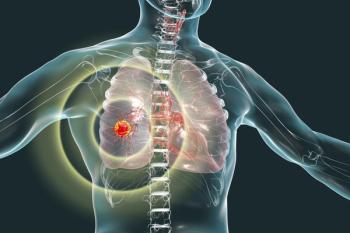
Dr. Graeme M. Rosenberg, a thoracic surgeon specializing in airway intervention and reconstruction, and Dr. Jorge J. Nieva, an associate professor of clinical medicine and a medical oncologist, both of Keck Medicine of USC, discussed how treatment decisions for younger adults with lung cancer often require a more individualized approach, particularly when patients are otherwise healthy and eligible for surgery and targeted therapies.
In a conversation with CURE, alongside Dionne Harmon, an Emmy-winning television producer and lung cancer survivor treated at USC, the physicians explained that younger patients are less likely to have a history of tobacco use or chronic lung disease but may present with more complex or multifocal disease. Because of this, careful staging and molecular testing are key steps before deciding on treatment.
How do you approach treatment decisions for young adults with lung cancer, and how does this differ from other kind of patient populations?
Dr. Jorge J. Nieva: Young lung cancer patients are a very different breed from older cancer patients. They’re generally much less likely to have used tobacco products. They’re much less likely to have underlying chronic lung disease, but they’re actually more likely to have disease that has spread to the lining of the lung or to be multifocal.
As a result, we have to individualize care for these patients and make sure that our staging is done properly. The good news is they tend to have great lungs and be really healthy, so we have a little more liberty in terms of what we can do with surgery.
Very often, these patients have what we call actionable genomic alterations. Those are changes in the cancer where we’ve developed drugs that specifically target those alterations. As a result, oftentimes these patients can be spared more difficult treatments like chemotherapy. However, many of these patients do need to take some of these targeted agents for years after their surgery.
Dr. Graeme M. Rosenberg: I would add that we consider a number of things from a surgical standpoint when we encounter younger patients. One is that it’s easier to determine someone’s risk stratification or risk profile for tolerating an operation. People in their 40s, 50s or 60s tend to tolerate surgery well unless they have underlying chronic medical conditions.
We also have to consider the longer life expectancy that someone in their 40s has versus someone in their late 70s or early 80s. From a surgical perspective, we lean heavily toward minimally invasive, robotic-assisted surgery and, when possible, operations that spare as much lung parenchyma or lung tissue as possible, like a segmentectomy, where we take just a portion of the upper lobe instead of the whole upper lobe.
There’s more time in a person’s life for them to potentially develop new disease or recurrent disease, so we want to preserve as much remaining lung function as possible without jeopardizing the cancer-related benefits of an operation. Those are a few factors we take into consideration when we see younger patients.
Dionne: Just to add to what they were both saying, I was very fortunate in that the middle lobe of my lung that was taken out was sent for pathology and DNA testing. I was fortunate that I had an EGFR mutation where there was a medication available for me.
I had one of those meetings with my mom and my fiancé, Jesse, with Dr. Nieva, Dr. Rosenberg. So we all talked about what that looked like because, if I’m not mistaken, once the middle lobe was taken out, we realized that it wasn’t just one tumor, it was two, and that the cancer had spread to, I think, two of the lymph nodes within the part of the lung that was removed.
So my diagnosis was changed from stage 1B to stage 3A, and that’s why the conversation came up about chemotherapy and radiation. I think it was 12 weeks of chemotherapy and maybe five weeks of radiation, if I’m not mistaken.
All of those procedures were explained to me — what that looks like, how it impacts you and all of those things. I had all of my questions, my mom had her questions and everybody asked what they needed to ask. We just kind of hunkered down and said, this is what we have to do.
Meanwhile, we were waiting for the results of the DNA testing, and I think it was about a week before I was supposed to start chemotherapy that we found out I was a match for this medicine, Tagrisso (osimertinib).
Transcript has been edited for clarity and conciseness.
For more news on cancer updates, research and education,