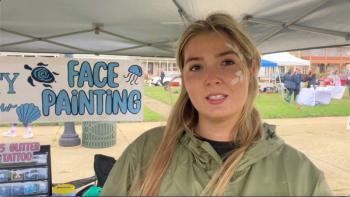
Emma Halligan found connection at a free New Jersey retreat for women with cancer, which held its annual walk and 5K on Oct. 17.

An expert discusses the need to tailor treatment duration in bladder cancer, balancing improved outcomes with toxicity and exploring new tools.
At the 2026 NCCN Annual Conference, Dr. Thomas Flaig sat down with CURE to discuss how advances in bladder cancer treatment are reshaping clinical decision-making. He highlighted the ongoing challenge of balancing improved outcomes with treatment-related toxicity and emphasized the need to better individualize how long patients remain on therapy.
Flaig currently serves as a professor of Medicine-Medical Oncology and is the vice chancellor for Research at the University of Colorado Anschutz School of Medicine.
With newer treatments improving outcomes in bladder cancer, how do doctors decide how long a patient should stay on therapy, and is there a way to reduce side effects without compromising effectiveness?
When we have advances in cancer, what we typically do is we use pretty aggressive therapy and ask: Can we make it better? Can we see better outcomes? And I think in bladder cancer, across the board, we've seen that we have regimens for non-muscle invasive, muscle invasive and advanced urothelial carcinoma that are better. So one of the questions a lot of us have now is: OK, we've improved cure rates and we've improved outcomes, but what is the cost in terms of toxicity? And how do we know how much therapy is enough for a given patient?
So, one of the really important unmet needs that I see is the idea of customizing the duration of therapy for an individual patient. Whenever they have had a reasonable response, we could stop therapy, because right now we just treat people for a certain length of time or a certain number of cycles regardless. That unmet need may be addressed through markers.
So, circulating tumor DNA (ctDNA) if we see cancerous DNA in your blood, that probably means the therapy is not done working or is not yet effective. If we see that clear, that might mean that some patients could stop therapy earlier and, in those cases, have fewer side effects. So, I think that's an unmet need right now in terms of customizing therapy duration.
Transcript has been edited for clarity and conciseness.
For more news on cancer updates, research and education,