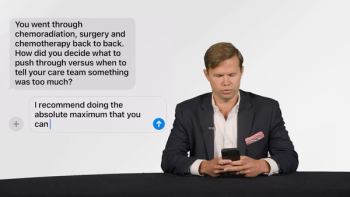
In the latest installment of CURE's "Text a Survivor" series, Brad Moore answers some of the most common questions people have about living with and beyond a colorectal cancer diagnosis.
After a liver cancer diagnosis, one son stepped forward as a living donor, turning uncertainty into hope through a life-saving decision.
When Charles Walker was diagnosed with liver cancer in 2023, his family was confronted with a life-altering reality. Having never faced a serious illness before, the diagnosis brought emotional strain and uncertainty as his condition gradually worsened. Although a transplant eventually became an option, his lower Model for End-Stage Liver Disease (MELD) score meant he was not prioritized for a deceased donor organ. This led to the introduction of the living donor program, a path the family had not previously considered.
For his son Kyle, learning about living donation marked a turning point. Initially unfamiliar with the process, he quickly began to consider the possibility of helping his father directly. After reflecting on the situation, he described the decision to pursue testing as straightforward. Within weeks, he underwent initial screening, beginning with blood work, followed by an extensive evaluation process that included approximately seven to eight hours of consultations with medical professionals. These discussions played a critical role in easing concerns and providing clarity about the procedure, recovery, and potential risks.
Additional testing, including imaging and physical assessments, was completed within approximately one month, highlighting the efficiency of the process. Throughout this period, Kyle balanced the emotional weight of his father’s illness with the practical steps required to move forward as a donor. He emphasized that much of his initial anxiety was alleviated through direct communication with physicians, which helped replace uncertainty with informed confidence.
As the surgery approached in January 2025, Kyle remained focused on supporting his father. Adopting a composed and lighthearted approach, he aimed to reassure his family and maintain a sense of normalcy. His experience illustrates the intersection of medical decision-making and personal commitment, demonstrating how access to information and timely care can empower individuals to take life-saving action for a loved one.
For more news on cancer updates, research and education,