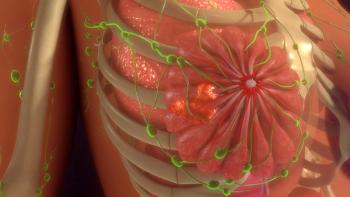
Kazia Therapeutics CEO Dr. John Friend discussed how paxalisib is being studied in HR-positive, HER2-negative breast cancer, why researchers are focusing on treatment resistance and what the ongoing clinical trial could show for patients.
Dr. Robert S. Alter discusses what to ask before thyroid surgery, why "active surveillance" isn't passive and how targeted therapy is changing outcomes.
A thyroid cancer diagnosis often arrives after something subtle: a swollen lymph node, a change in the voice. What follows — biopsy, cell typing, a decision about how much of the thyroid to remove — can move quickly, and people are sometimes surprised by choices made on their behalf.
In an interview with CURE, Dr. Robert S. Alter, co-division chief of genitourinary oncology and head and neck oncology at Hackensack Meridian John Theurer Cancer Center in Hackensack, New Jersey, discussed the questions people should ask at diagnosis, why he avoids the phrase "good cancer," what active surveillance really requires and how targeted therapies are changing outcomes.
Alter: The first part of the conversation should be all about the initial symptoms and presentation. What led them to the doctor? Sometimes it's something as subtle as a suspicious lymph node, a swelling, a voice change. Once a concern is there, the referral to a biopsy, which can be done ultrasound-guided — it doesn't have to be surgical.
But once you have that information, it's confirming the diagnosis. It's important to define the cell type. There are three different categories of thyroid cancer, and each treatment plan is based upon the cell structure. Then there's the initial staging, the extent of disease.
Through the doctor's eyes, we have to formulate what the first plan is in regard to the type of surgery. Is it going to be one lobe, what's called a lobectomy, or is it going to be a total thyroidectomy? A very common scenario is they take out one lobe, they analyze it, and when they get that result they formulate a plan: do they stop there for surveillance, or does one proceed forward doing surgery for the other side? Some doctors like to just jump in and take out both lobes based upon suspicion.
There are times when one truly wants to maintain what the body has to offer. If you still have one lobe of a thyroid in, it's very functional. One can easily stay off medications. So the conservative approach is really based upon the fact that one lobe of the thyroid can suffice for the rest of life, and there are guidelines for when you consider doing the total thyroidectomy initially or based upon the result of the first lobectomy. A lot of times people walk in and they assume they'll have one lobe taken out, and they're blindsided by the second procedure. Physicians should offer that information, and if not, patients should ask about it.
Other things you have to ask: Is this genetic? Is there a family history that one should ascertain, both in regard to a genetic risk assessment, counseling and testing? Most of these patients are in their 20s and 30s, sometimes a little bit older. They have to ask whether this is something they received from family members, and therefore they should ask about siblings as well, or is it something they can carry on to their offspring? The fear of the disease itself overwhelms you, and you tend to forget anything but yourself. But it's always important to inquire about the rest of the family.
It's always hard to be composed when you get a diagnosis. Coming with a list of questions and asking the surgeon for time is quite important.
Is there ever a good disease and ever a bad disease? I don't like using the term "good cancer" or "bad cancer." I like to use better terms: long-term survival and complete remissions. In the eyes of a person who just gets diagnosed with cancer, there's no good news. It's just cancer.
You look at quality of life, you look at long-term survival, and then we come to the association that it's probably a good disease to have, because it really does not shorten survival or predict long-term complications. When it comes to quality of life measures, people heal from surgery well. When it comes to doctor visits and checkups and pats on the back that it's another good visit six months, one year later, one predicts that eventually there will be a very good outcome.
So in my eyes, there's no real good cancer. There are great outcomes. And when you deal with thyroid cancer, we do believe a lot of these patients receive news of significant success long term.
My concern when we talk about active surveillance is that sometimes it's taken as "don't worry about it" — and if you miss an appointment or two, if you don't show up for another visit, it's fine. I like to stress to my patients that the word "active" means pure participation, not passive. And surveillance is the monitoring that we do.
There is not so much quality evidence when it comes to active surveillance in thyroid cancer. There's something called a microcarcinoma, where the tumor is really small, and there's some data. When the tumor is more than a centimeter, there's really not much data.
The biggest fear we have is that patients get lost to follow-up, either on the physician's end or the patient's end, and then it develops into something more of a concern. If you go through most scenarios and algorithms, it does lead to a tissue diagnosis, it does lead to scanning, it does lead to an intervention, probably surgical. So I think it's more the exception than the rule. There are conditions where active surveillance is a significant option — that being in some genitourinary cancers and some breast cancers as well. But for thyroid cancer, the disease caught early is an indication that something should be done. Active surveillance is not really well received among oncologists, and definitely not among surgeons.
After the tumor is removed, for the most part we have our patients monitored by endocrinologists, who not only monitor with ultrasounds and lab studies but are also involved with thyroid replacement. If patients undergo total thyroid removal, they technically have no thyroid activity, and there's a significant need for the equilibrium of the body.
Thyroid replacement is a necessity. If you have no thyroid function, significant issues happen medically and clinically. The medication they take is an accurate replacement. Monitoring and assessing the blood levels is usually under the care of either primary care physicians or endocrinologists, and the more well balanced your thyroid function is by lab studies, the fewer typical symptoms patients have — most commonly fatigue. Depending on where they are medication-wise, whether there's too much thyroid coverage or too little, there can be cold intolerance, heat intolerance, appetite changes — quality of life measures that really should be well balanced with normal monitoring.
Life after thyroid cancer should be normal. Monitoring the thyroid levels and sustaining body function the way it normally should be is the equivalent of having the thyroid still in. Patients can benefit from normalization of quality of life with constant supervision.
As time goes on, endocrinologists understand patients better. They get a good idea as to how often lab studies need to be done and how to adjust medications. It really is an education for patients to tell their physicians about a change in their symptoms, or something that's different, so they can be evaluated for further monitoring.
There are three different categories of thyroid cancer. The more common one is what we call well-differentiated — they used to be called follicular thyroid cancer or papillary thyroid cancer. The two others, medullary thyroid cancer and anaplastic thyroid cancer, are not common, and they're treated a little bit differently.
Our first approach with well-differentiated thyroid cancer is to not just look at the cell type, but at what we now call next-generation sequencing. We have to be able to analyze whether there are any chromosomal abnormalities or mutations associated with that individual cancer. There are specific targeted therapies that can be aligned to each of these abnormal mutations.
The treatment is usually not chemotherapy. We're usually utilizing targeted therapies under the category of tyrosine kinase inhibitors. BRAF is a very common mutation that happens with thyroid cancer. NTRK has been a relatively new mutation, and the medications found to target it work quite well. Our patients respond beautifully when these medications have the proper targets, and that probably happens in more than 50% of our patients. For patients who don't have a specific target, there are sequences of therapies that work quite well.
The use of immunotherapy is coming into play. This is really where the science is now becoming more involved. Straightforward immunotherapy may work for patients with thyroid cancer if they have a certain type of mutation, but a lot of times the concern now is that if they don't have the mutation, it's probably not as successful. What they're looking into now is combining the immunotherapies with these proven targets that do have a mutation, and seeing exceptional responses as well.
This is meant to be a chronic disease, so it's not about being on the strongest drug and having the most side effects. I tell my patients: you're walking a marathon. It's not meant to win the first mile; it's meant to win the whole race. So you have to pace yourself. Some of these medicines require adjustments. Toxicities can be different in each person. Like a chronic disease — high blood pressure or diabetes — you can be on medicine for a long time.
There are enough markers in the blood that one can use for assessment rather than just going for scans every so often. And the scans have been improving as well. We used to rely upon X-rays and CT scans. Now we're using MRIs, we're using PET scans, which give us better focus and direction about how patients are responding and about the development of new disease if it does progress.
Drug-wise, we're not anywhere near perfect. But we're getting really good at it. Combination therapies are going to be a step up from where we are now, and the next-generation sequencing results really predict our first and second line of therapy, which can be quite successful.
Transcript has been edited for clarity and conciseness.
For more news on cancer updates, research and education,