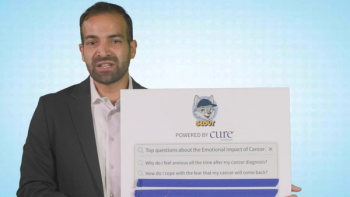
Psychiatrist Dr. Yesne Alici of Memorial Sloan Kettering Cancer Center answers questions about family relationships during cancer, from asking for help to talking with children and friends.
A leukemia survivor shares how her experience inspired a national support network for young adults navigating cancer and survivorship.
A cancer diagnosis during young adulthood can be profoundly disruptive, affecting education, relationships, identity and long-term life plans. For many patients, the experience is not only physically demanding but also deeply isolating, particularly when peer support and age-specific resources are limited.
At the 2026 NCCN Annual Conference, these issues were brought to the forefront during a plenary session focused on supporting younger adults across the cancer care continuum.
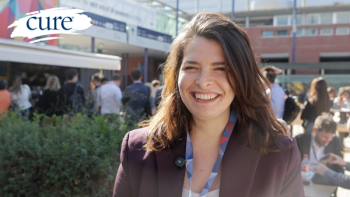
Following the session, CURE sat down with Stephanie Simolevich, executive director of Young Adult Survivors United, who shared her personal journey from a leukemia diagnosis in her college years to founding a national support network for young survivors.
Simolevich: In 2005, I was in my college years, of course, and over the summer of 2005, I started developing symptoms that kind of came out of nowhere: random bruises, being highly fatigued and I had some water weight gain. Then, what ultimately happened was I had a high fever. It alarmed my parents, so they took me to a hospital on a Wednesday night. They did a ton of blood work. Two days later, I had a bone marrow biopsy with a suspicion that I had leukemia, and then the next day, it was confirmed that it was leukemia. Treatment started two days later.
It was all very fast, and a huge disruption in my life. I’m honest when I say I didn’t even know leukemia was a cancer; I thought it was just a blood disorder. But then I also was wondering when I would get to go back to college. I ended up taking a whole year off, and I had intensive chemotherapy, brain radiation, as well as spinal taps where they injected chemo into my spine. That was more to take preventive measures because if it would have spread, it would have gone up my spine and into my brain.
It was very hard in the sense that I didn’t know what to expect. There were a lot of unknowns. My family really had to just rally, and I’m lucky to say that because I know that’s not the case with all patients. I had the family support, some don’t, but it was a crisis. It was very traumatic. I lost some friendships along the way, and I had cognitive issues. "Chemo brain" is real. I had severe neuropathy in my hands and my feet, and transitioning back into school was so hard because you’re trying to acclimate back into life as a young adult.
I celebrated my 20th birthday two weeks after being diagnosed, and I was still in the hospital. Your life is just on such a setback that it is so hard mentally, emotionally and physically. If I’m honest, I lost all my muscle mass to get back into life. I saw a light at the end of the tunnel and knew that the more I shared my story because no one looked like me, everyone was interested in hearing what my journey was and looked like, and how I was feeling. Of course, that was in the hospital settings and the cancer center settings. I wasn’t really on Facebook, which was just launching for college students, and that was the only social media platform there was at the time, primarily. It was hard to navigate and find avenues of peer support.
That’s when the light clicked on in my head, and I knew that I had to give back in some way, some form, in the cancer community. I just didn’t know to what degree. I ended up getting my master’s in social work degree, and I was working for a local Pittsburgh charity at the time after graduating. Then I was given an opportunity to start a project of my own, and the rest is history.
I built a young adult cancer community in the Pittsburgh, Pennsylvania, region between 2012 and 2019. Through that experience, hearing them in the support group meetings and firsthand going through everything myself, I knew that they needed to be heard and they needed to connect, but they also needed to live. We needed time and space to not feel like a patient, and that’s when I built the mission of providing emotional, social and financial support. Monthly, I would take them out and do fun activities from cooking classes, kayaking and MLB professional baseball games; you name it, we did it. We went to paint nights. I took them axe-throwing, believe it or not, once. That’s where I saw us building the community because they would look forward to something; it was a distraction from their everyday life and stressors, and they could bring a caregiver or a friend.
That also helped because when you're the "new kid on the block," if you will, there’s a lot of anxiety coming into a space and a place where you don’t know anyone. All you know is there are other people who have cancer, similar in age. By 2019, I realized that this was bigger than what I had built because it was a program within an entire organization, and it needed to have its own face, place and space.
So, March 1, 2020, I shouted to the world on primarily social media, but to everyone I knew, even all of the professional networks I was in, that Young Adult Survivors United launched.
Immediately after that was the pandemic. I knew the importance of having in-person support, but I also knew I had to build a virtual platform or else we were going to lose everyone. Knowing you were already feeling isolated and struggling, having a pandemic where you can’t leave your house just heightens the feeling of isolation. But what we did was build a platform that was virtual, which matched everything we were doing in person.
We started getting requests from people out of town, out of state, all across the United States asking if they could join. We didn’t have to say yes, but I had to say yes. I could not turn anyone away.
In the past five or six years, we’ve really grown immensely with our virtual platform. I have made this my life mission, my purpose and I am so fortunate that I get to speak from a personal perspective. People don’t know this unless they’ve had cancer, but the memories are there with you forever. I can picture myself the day I was diagnosed. I know some of the things that happened, the challenges along the way, and how much weight I gained and lost; everything feels like it was yesterday, even though it was two decades ago.
I think that’s the important and unique piece of having cancer — not everyone wants to live it and speak it. I do because I know it’s giving back. I'm very blessed to share the story and how it’s led to being a professional in this field, knowing that there’s so much more work to be done, but that we can be an organization that provides a lot of comprehensive care support, from when you’re diagnosed to when you’re years out into survivorship.
Or, if you know you have end-stage cancer, we’re still here to support your every need, every step of the way, with different types of programs.
Once individuals join the community, I’ve seen the best of friendships that are probably going to last a lifetime now. We’ve even seen people build dating relationships. It’s very rewarding, or else I don't think I could live it, because it is hard to lead an organization that provides support to cancer patients. We do lose people, and that’s the hardest part of my job. But knowing the impact that we made — and if we didn’t exist, how much harder their lives would have been and how much lonelier they would have been — that’s the beauty that I get to see in my job.
Transcript has been edited for clarity and conciseness.
For more news on cancer updates, research and education,