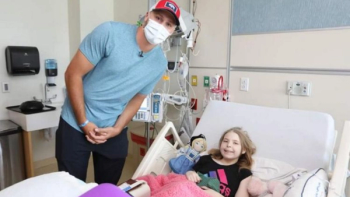
Hannah was 11 when she was diagnosed with acute lymphoblastic leukemia (ALL). Four years, two relapses and a 53-day hospital stay later, she is back in school.
Overview of nodular sclerosis Hodgkin lymphoma, including diagnosis, staging, treatment options by stage and possible side effects.
Nodular sclerosis Hodgkin lymphoma is the most common subtype of classical Hodgkin lymphoma. It often affects adolescents and young adults, although it can occur at any age. The disease begins in lymphocytes, a type of white blood cell that helps the body fight infection. In nodular sclerosis Hodgkin lymphoma, cancerous cells called Reed-Sternberg cells are found within lymph nodes, typically in the chest, neck or underarm areas.
This subtype is called “nodular sclerosis” because the lymph node tissue often shows bands of scar-like tissue that divide it into nodules. Many patients are diagnosed after noticing painless swelling in the neck or chest, or after imaging tests reveal enlarged lymph nodes in the mediastinum, the area between the lungs.
Hodgkin lymphoma is generally considered highly treatable, and many patients are cured with initial therapy. Still, treatment decisions depend on stage, symptoms, overall health and personal preferences. Open communication with your oncology team is essential.
Diagnosis typically begins with a physical exam and imaging tests such as CT or PET scans to evaluate enlarged lymph nodes. A biopsy, often an excisional lymph node biopsy, is required to confirm the diagnosis. Pathologists look for Reed-Sternberg cells and characteristic patterns of fibrosis under the microscope.
After diagnosis, staging tests determine how far the lymphoma has spread. Staging may include PET-CT scans, blood work and occasionally a bone marrow biopsy. Hodgkin lymphoma is staged from 1 to 4:
Stage 1: lymphoma is found in one lymph node region or a single organ outside the lymph system.
Stage 2: lymphoma involves two or more lymph node regions on the same side of the diaphragm.
Stage 3: lymphoma is found on both sides of the diaphragm and may involve the spleen.
Stage 4: lymphoma has spread widely outside the lymph system to organs such as the liver, bone marrow or lungs.
Some clinicians use the term “advanced” instead of metastatic, but stage 4 reflects more widespread disease rather than a typical solid tumor metastasis pattern.
Treatment is tailored by stage and risk factors.
Stage 1
Frontline: Early-stage disease is often treated with combination chemotherapy, sometimes followed by involved-site radiation therapy. A common regimen includes doxorubicin, bleomycin, vinblastine and dacarbazine. Some patients may receive fewer cycles based on interim PET results.
Second-line: If the disease returns or does not respond, second-line therapy often includes different chemotherapy combinations, sometimes followed by high-dose chemotherapy and autologous stem cell transplant.
Third-line and beyond: Patients who relapse after transplant may receive targeted therapies such as brentuximab vedotin or immune checkpoint inhibitors.
Stage 2
Frontline: Treatment is similar to stage 1 but may involve more cycles of chemotherapy or combined-modality therapy, especially if bulky disease is present.
Second-line: Salvage chemotherapy followed by autologous stem cell transplant is common for eligible patients.
Third-line and beyond: Targeted therapy or immunotherapy may be used, and clinical trials may be discussed.
Stage 3
Frontline: Combination chemotherapy remains the foundation of treatment. In some cases, regimens may be intensified depending on risk features.
Second-line: For relapsed or refractory disease, salvage chemotherapy followed by stem cell transplant is standard for fit patients.
Third-line and beyond: Options include brentuximab vedotin, checkpoint inhibitors such as nivolumab or pembrolizumab, additional chemotherapy or participation in a clinical trial.
Metastatic (Stage 4)
Frontline: Advanced-stage disease is typically treated with combination chemotherapy. Treatment is often guided by interim PET scans to assess response.
Second-line: If the lymphoma does not respond or returns, salvage chemotherapy followed by autologous stem cell transplant is considered for eligible patients.
Third-line and beyond: Targeted agents, immunotherapy or allogeneic stem cell transplant may be considered in select cases.
Side effects vary by treatment type and intensity. Chemotherapy may cause fatigue, nausea, hair loss, lowered blood counts and increased infection risk. Bleomycin can affect lung function, so pulmonary monitoring may be required. Doxorubicin may affect heart function, and doctors may monitor cardiac health during treatment.
Radiation therapy can cause skin irritation, fatigue and, depending on the treatment field, long-term risks such as thyroid dysfunction or secondary cancers.
Stem cell transplant involves high-dose chemotherapy and may cause prolonged low blood counts, infection risk and organ-related complications.
Targeted therapies and immunotherapies may cause infusion reactions, neuropathy or immune-related side effects such as thyroid changes, rash or inflammation of organs.
Discussing potential short- and long-term effects with your oncologist can help you prepare and make informed decisions.
A diagnosis of nodular sclerosis Hodgkin lymphoma can feel overwhelming, but it is important to know that many patients achieve long-term remission or cure, especially with early-stage disease. Treatment plans are individualized based on stage, symptoms and overall health.
Ask your oncologist about the goals of therapy, potential side effects, fertility preservation, long-term follow-up and available clinical trials. Staying informed and engaged in your care can help you navigate each step of your treatment journey with clarity and confidence.
Editor’s Note: This guide is designed to be a starting point. Your personal experience will be unique. By using this information as a foundation for your discussions, you can partner with your oncologist to make the best decisions for your health.
For more news on cancer updates, research and education,