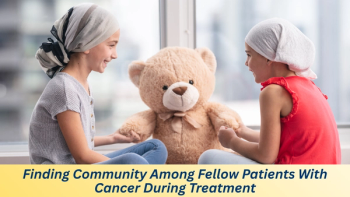
A leukemia survivor recalls how bonding with other patients helped his hospital stays go by faster and became a key part of his emotional healing.
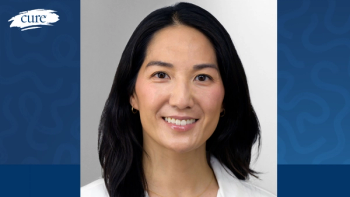
Nona Baker, who was first diagnosed with a blood cancer in 1991, shares her experience with polycythemia vera.
Nona Baker, who was first diagnosed with a blood cancer more than 30 years ago, has intimate first-hand experience of what fatigue really feels like.
“Nobody can understand fatigue,”
Baker, a survivor and patient advocate based in the United Kingdom, received a diagnosis of essential thrombocythemia (ET) in 1991, followed by polycythemia vera (PV) in 2004. Both conditions fall under the umbrella of myeloproliferative neoplasms, or MPNs.
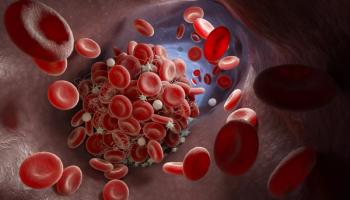
Essential thrombocythemia is characterized by an increased number of platelets in the blood, whereas polycythemia vera is primarily characterized by an elevation of the red blood cells, according to the MPN Research Foundation.
Baker spoke with CURE about her current treatment realities with regular venesections, or blood draws, and her hopes for the future of MPN treatment.
What is your what is your hope for the future of PV treatment?
My experience of having PV now is the venesections, and that means for me, I have to travel to the hospital. This isn't the hospital's fault. It's just the process. You have your bloods taken, you wait for the bloods to come back. You then have to go upstairs, and you have to wait in the day unit. You then have the venesection, and then you come home, and fatigue is the biggest problem I still find with PV, and nobody can understand fatigue. It is not just tiredness, it is like walking up the stairs in thick treacle. It's really, really difficult.
And I think my hope, my real hope, is there's a drug that will stop the need for these venesections and also make it easier to live with PV.
One of the other side effects that's been problematical is my skin, and I simply cannot go out in the sun because I started with actinic keratosis, and it's progressed to having basal cell carcinomas. And so, I think my hope is that there will be something new that will circumnavigate the need for venesections and a will lead to a better quality of life.
And I do say this, I think for all patients with PV the future has never been brighter. You know, I was diagnosed in 1991 which is a long time ago, and the drugs that were prescribed in 1991 you would not give a young person these days. So I am hopeful that very soon, there will be something really exciting that will change the lives for people like myself with PV.
Transcript has been edited for clarity and conciseness.
For more news on cancer updates, research and education,