Researchers are studying whether combining CAR-T cell therapy with targeted drugs could help children with high-risk leukemia, including infants whose cancer may be more likely to return after treatment.
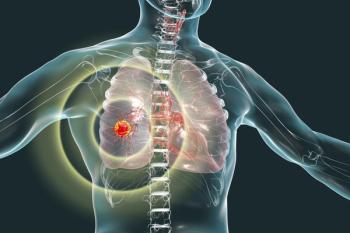
New T-cell engagers and ADCs show survival gains in pretreated small cell lung cancer, signaling long-awaited progress and more treatment options for patients.
New therapies like T-cell engagers and antibody-drug conjugates are showing survival gains in pretreated small cell lung cancer, offering new options after years of limited progress.
Triparna Sen, a professor and associate director of research in the Division of Medical Oncology, Department of Internal Medicine at The Ohio State University, discussed emerging clinical trial advances in small cell lung cancer.
Sen explained that while lung cancer treatment overall has advanced significantly, small cell lung cancer lagged behind for many years, with chemotherapy as the primary option and immunotherapy introduced in 2018 providing only modest benefit.
More recently, new classes of therapies have entered clinical trials, including T-cell engagers, bispecific T-cell engagers and antibody-drug conjugates. She highlighted agents such as Imdelltra (tarlatamab) and obrixtamig, both DLL3-targeted T-cell engagers, as promising options showing activity in studies. She also pointed to antibody-drug conjugates targeting proteins like B7-H3 and TROP2.
According to Sen, these therapies represent meaningful progress, as positive clinical trial results in small cell lung cancer have historically been limited. She noted that these newer treatments are demonstrating survival benefits in patients with pretreated, metastatic disease, an area where improvements have been difficult to achieve.
Sen also referenced ongoing trials evaluating lurbinectedin in combination with immunotherapy in the maintenance setting. Overall, she emphasized that the most important shift is the expansion of treatment options, with newer therapies not only increasing choices but also improving survival outcomes for patients with small cell lung cancer.
Which emerging treatments in clinical trials are showing the most promise for patients with small cell lung cancer?
I think there has been so much advancement in the field of lung cancer in general, but specifically in small cell lung cancer, we have seen unprecedented advancement. For the longest time, the only drugs we had in our arsenal were chemotherapy, and then we had the introduction of immunotherapy back in 2018, and patients had very modest response to these drugs. Very recently, we are seeing a host of new classes of drugs called T-cell engagers, bispecific T-cell engagers, and now antibody-drug conjugates that have entered the clinic. Specifically, I’m going to talk about a few notable T-cell engagers that are doing well in clinical trials, like [Imdelltra], which is a DLL3-targeted T-cell engager, and obrixtamig, which is another DLL3-targeted T-cell engager. And I’m going to talk about some of the antibody-drug conjugates targeting surface targets such as B7-H3, TROP2, etc.
The reason for highlighting these classes of drugs is because we can see positive clinical trials after a very long time in small cell lung cancer. We needed some wins, and we are finally seeing some wins in small cell lung cancer, with survival benefits like we have not seen in a very long time in a pretreated, metastatic small cell lung cancer population. I’ll also talk about trials in the maintenance setting combining a drug called lurbinectedin with immunotherapy. So yeah, we have a lot of drugs, we have options now. I think that’s the point, which is the most important one, is that we didn’t have options. Now we have options, and these are not bad options. They are improving survival, which is something we couldn’t say a few years ago.
Transcript has been edited for clarity and conciseness.
For more news on cancer updates, research and education,