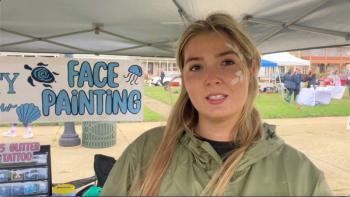
Emma Halligan found connection at a free New Jersey retreat for women with cancer, which held its annual walk and 5K on Oct. 17.

Dr. Shaun P. McKenzie discusses bile duct cancer challenges and why awareness and specialized care help patients get diagnosed earlier and live longer.
During Gallbladder and Bile Duct Cancer Awareness Month, CURE spoke with Dr. Shaun P. McKenzie, a surgical oncologist who specializes in complex hepatobiliary and pancreatic cancers. Board certified in general surgery as well as surgical oncology, hepatobiliary surgery and pancreatic surgery, he practices with Texas Oncology Surgical Specialists–South Austin and serves as medical director for surgical oncology at Texas Oncology.
In this interview, McKenzie discusses the challenges patients face with bile duct cancer, also called cholangiocarcinoma, and other biliary tract cancers, which are often diagnosed at later stages when treatment options may be limited. He also highlights why awareness initiatives are critical for encouraging patients to report symptoms early and seek care.
What is the importance of having this awareness month and other initiatives like it?
It is huge because my area of expertise is in liver, bile duct and pancreas cancers, so I see these patients often even though the cancers are rare. I see the struggle they go through and the frustration of finding them late when there are treatments we cannot offer. That is why I emphasize not ignoring abnormalities. If it is nothing, that is the best news.
At the same time, there is hope. There are new treatments. In some centers chemotherapy is infused directly into the liver for this cancer, which was not done even 10 years ago, and those patients are living two to three years longer than patients who do not have that approach.
Progress has been slow, but it is accelerating. I want patients to stay hopeful, talk with their physician, and seek care from physicians who see this cancer frequently because it helps to have someone who knows where the cutting edge is.
Transcript has been edited for clarity and conciseness.
For more news on cancer updates, research and education,