Diagnosed with stage 4 breast cancer weeks after giving birth, Eileen Carter explains why getting a second opinion changed the course of her care.
For patients navigating a cancer diagnosis, there is a hidden complication that requires vigilance: the risk of a pulmonary embolism.
For patients navigating a cancer diagnosis, the focus is often understandably on treatments like chemotherapy, radiation or surgery. However, there is a hidden complication that requires equal vigilance: the risk of a pulmonary embolism (PE).
To help patients understand this connection, CURE spoke with Dr. Peter Monteleone of The University of Texas at Austin Dell Medical School and a clinical consultant with RapidAI and Dr. Ryan Moore of Hackensack University Medical Center. They shed light on why cancer creates a "perfect storm" for blood clots and what you should watch for.
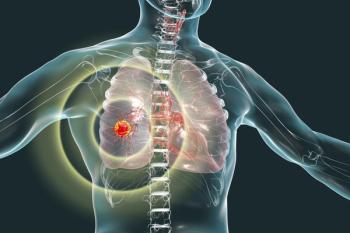
According to Monteleone, the term "pulmonary" refers to the lungs, and "embolism" refers to something traveling through the bloodstream to get there.
"Blood clots don't start in the lungs," Monteleone explained. "They tend to start somewhere else, then they break free and move to the lungs. Most commonly, they start in the veins of the legs." When a clot forms in the deep veins of the leg (known as deep vein thrombosis or DVT), it can travel through the heart and lodge in the lung, potentially blocking blood flow and causing a life-threatening emergency.
The relationship between cancer and blood clots is complex. Both experts point to a "prothrombotic" or hypercoagulable state, a condition where the blood is much more likely to clot than usual.
A blood clot is serious for anyone, but for a patient already managing cancer, the impact can be magnified.
"When someone's dealing with another underlying condition like cancer, the threat or the compromise that can happen from a blood clot... can be even bigger," says Dr. Monteleone.
Because the body is already under stress, the respiratory and cardiovascular strain caused by a pulmonary embolism can be more difficult to manage. This makes early detection and prevention vital components of cancer care.
Patients and caregivers should be alert for the following symptoms:
For more news on cancer updates, research and education,